
Sewing styles can range from careful hand stitching and fast machine construction to garment making, quilting, visible mending, embroidery and pattern making. Each approach uses thread and fabric differently, and understanding those differences can help you decide what kind of sewing you want to explore next.
Some people learn to sew because they want to make their own clothes. Others want to repair what they already own, create quilts, personalize garments or simply understand how a sewing machine works. There is no single correct path into sewing because the same basic skills can lead in many creative directions.
A straight machine seam might eventually become a pair of pants. A simple hand stitch could turn into decorative embroidery. Learning how fabric pieces connect can lead to pattern making. Even repairing a hole can become an opportunity to experiment with color and visible stitching.
At Moving Thread LA in Los Angeles, beginners and developing sewists can explore several of these approaches through hands-on classes focused on machine sewing, garment construction, pattern making and creative textile skills.
What Are the Main Sewing Styles?
The main sewing styles include hand sewing, machine sewing, garment construction, quilting, decorative stitching, mending, upcycling and pattern-based sewing. These categories often overlap rather than existing as completely separate techniques.
For example, a handmade garment may involve machine-sewn seams, hand-finished details and decorative embroidery. A quilt may be pieced by machine but bound by hand. A repaired pair of jeans might combine a patch with visible hand stitching.
That Overlap is part of what makes sewing so interesting. One new skill often opens the door to another.

Hand Sewing: The Original Way to Stitch
Hand sewing uses a needle and thread without a sewing machine. It is slower than machine sewing, but it gives the maker direct control over every individual stitch.
Basic hand stitches can be practical, decorative or both. A running stitch can temporarily hold layers together or become part of a visible design. A slip stitch can create a subtle finish. Back stitch creates a stronger continuous line, while blanket and chain stitches can add decorative texture.
Hand sewing is useful for:
- Sewing on buttons
- Small repairs
- Hemming
- Finishing difficult areas
- Attaching trims and embellishments
- Embroidery
- Visible mending
- Projects where machine access is difficult
Moving Thread LA has also offered a Hand Sewing, Mending and Embellishments workshop covering functional and decorative hand stitches alongside mending, hemming and garment personalization. Check the current listing for scheduling and availability.
Machine Sewing: Building Skills Through Speed and Control
Machine sewing uses a sewing machine to create consistent stitches much faster than sewing the same seam by hand. It is the foundation for many garment, accessory and home-sewing projects.
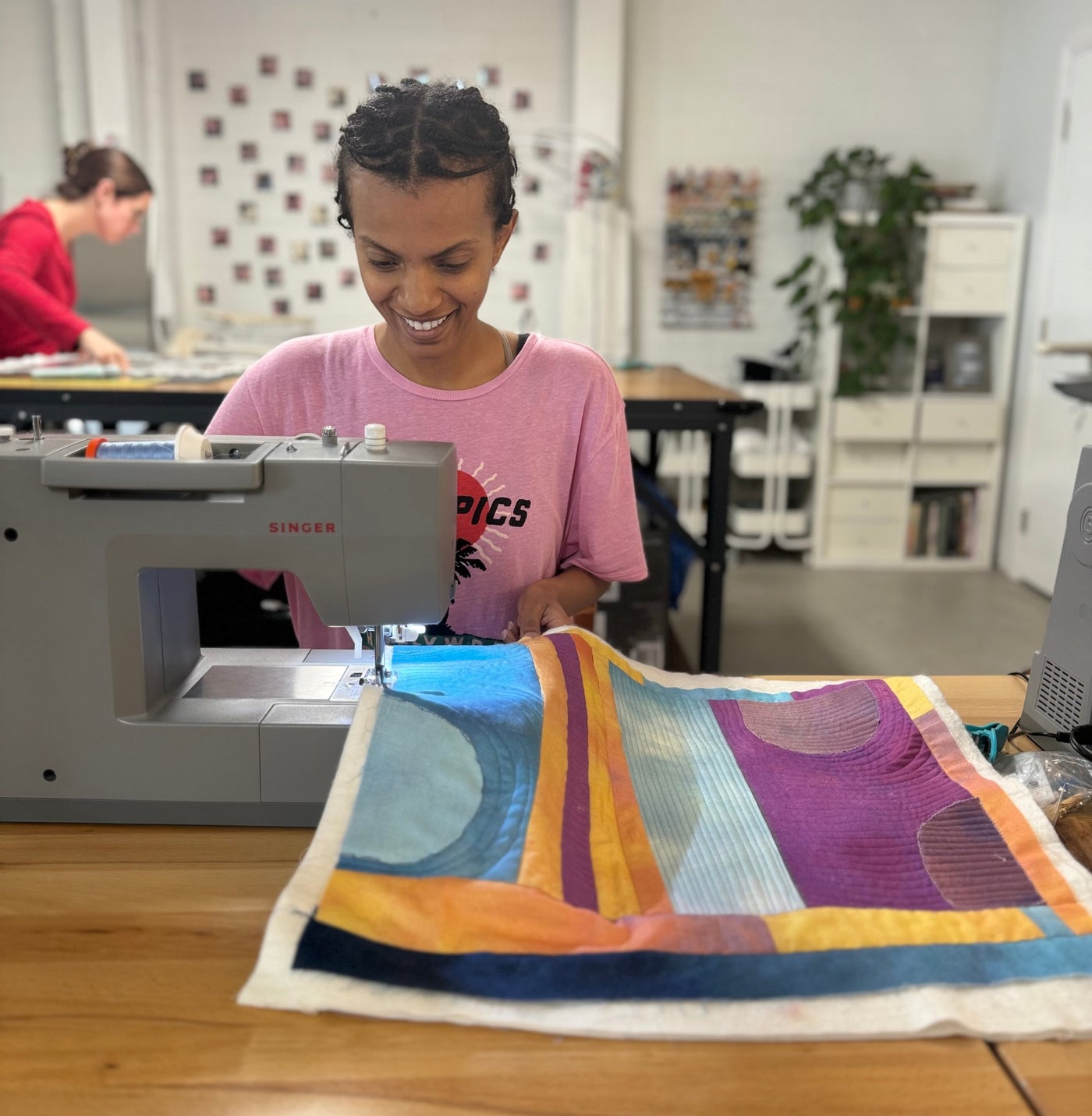
The machine can look intimidating at first because several things happen at once. Thread passes through tension mechanisms. A bobbin supplies the lower thread. The feed dogs move fabric beneath the presser foot while the needle repeatedly forms stitches.
Once those parts begin to make sense, machine sewing becomes less mysterious.
Moving Thread LA's Intro to Sewing Class for Beginners introduces new sewists to machine setup, threading, basic stitches and a first practical project. For students who want more repetition, the Intro to Sewing 4 Week Workshop builds those skills over several projects, including simple garment construction.
How Do Different Sewing Styles Compare?
Different sewing styles are best suited to different projects. Some emphasize speed and construction, while others focus on detail, fit, repair or visual expression.
| Sewing Style | Main Purpose | Good Projects to Explore |
|---|---|---|
| Hand sewing | Detailed stitching and finishing | Buttons, hems, repairs and embellishment |
| Machine sewing | Fast, consistent construction | Bags, garments and home projects |
| Garment sewing | Creating wearable clothing | Skirts, pants, tops and dresses |
| Pattern making | Designing and adjusting garment shapes | Custom-fit skirts, dresses and clothing patterns |
| Quilting | Combining layers and textile compositions | Quilts, wall hangings and patchwork |
| Decorative stitching | Adding visual detail | Embroidery, monograms and garment embellishment |
| Mending | Repairing damaged textiles | Patches, tears, hems and worn areas |
| Upcycling | Changing existing clothing or textiles | Altered garments and redesigned pieces |
Garment Sewing: Turning Fabric Into Clothes
Garment sewing focuses on constructing clothing that can actually be worn. It brings together machine skills, cutting, fabric knowledge, fitting and finishing.
This is the part of sewing that often feels most magical to a beginner.
You begin with flat pieces of fabric. Then seams create shape. Darts or gathers introduce volume. Sleeves, pockets, waistbands and closures are added. Eventually, an object that began lying flat on a table becomes something that fits around a three-dimensional body.
Beginner garments are usually designed to keep construction manageable. Elastic-waist pants, simple skirts, loose tops and easy dresses allow students to concentrate on fundamental skills before progressing to more complicated fitting and tailoring.
Pattern Sewing: Learning to Follow the Map
A sewing pattern acts like a map for constructing a garment. It provides the shapes that need to be cut and usually includes instructions explaining how those pieces fit together.
Learning to use a pattern means understanding information such as grainlines, notches, seam allowances, cutting layouts and markings.
At first, a commercial pattern can look like a strange collection of symbols and oddly shaped paper pieces. Once you understand the language, those pieces begin to reveal how the garment has been engineered.
This is an important step for sewists who want to move beyond basic rectangular projects and begin making clothing consistently.

Pattern Making: When You Want to Design the Shape Yourself
Pattern making takes the process a step further. Instead of only following an existing pattern, you learn how garment shapes are drafted and adjusted around measurements, fit and design.
This gives sewing a different kind of creative freedom.
You begin asking not only, “How do I sew this?” but also, “Why is this pattern shaped this way?”
Moving Thread LA's Skirt Workshop: Pattern-Making & Sewing demonstrates that progression. Students work from their own measurements, draft a skirt pattern, create a muslin fitting sample, refine the pattern and then construct the finished garment.
Once you understand basic pattern development, changing a garment becomes much more intentional. Length, fullness, silhouette and fit can become design decisions rather than limitations imposed by a ready-made pattern.
Quilting: Sewing With Layers, Blocks and Composition
Quilting combines layers of fabric with stitching, while patchwork often involves joining smaller fabric pieces into a larger composition. The two techniques are frequently used together.
Quilting introduces a very different way of thinking about sewing. Instead of shaping fabric around the body, you may be working with squares, strips, curves, repeated blocks or free-form compositions.
It teaches precision, color relationships and repetition.
A simple block can become completely different when its colors change. Several identical blocks can create movement depending on how they are rotated and arranged. Scraps that seem unrelated on their own can suddenly become part of a larger visual rhythm.
This makes quilting both structural and expressive.
Decorative Sewing: When the Stitch Becomes the Design
Decorative sewing makes the stitch itself part of what you are meant to see. Embroidery, appliqué, embellishment and decorative machine stitching can all transform a plain textile into something personal.
A few hand stitches around a pocket can change a jacket. Initials can personalize a tote. Repeated lines of colorful thread can create a border. Rhinestones, buttons, patches and trims can add another layer of texture.
You do not need to cover an entire garment for decorative sewing to have an impact. Often the most interesting embellishment is concentrated in one deliberate area.
For beginners experimenting with embroidery, simple embroidery designs are a good way to practice turning basic stitches into flowers, lines, initials and geometric motifs.
Mending: Sewing With a Practical Purpose
Mending uses sewing to extend the useful life of a garment or textile. The goal might be to repair a tear, reattach a button, fix a hem or reinforce fabric that has become worn.
Some repairs are designed to disappear. A matching thread and careful stitch can make a repair almost invisible.
Others deliberately stand out.
Visible mending uses contrasting patches, decorative stitches or obvious reinforcement so the repair becomes part of the garment's new appearance.
This can change the mindset around damaged clothing. A tear does not automatically have to mean the end of a garment. Sometimes it becomes the starting point for a new creative decision.
Upcycling: Changing What Already Exists
Upcycling begins with an existing textile or garment and changes it into something different. Instead of starting with untouched yardage, you are responding to what is already there.
An oversized shirt might become a fitted top. A dress could become a skirt. Denim scraps might become patches or a bag. A plain jacket could be transformed with embroidery and decorative stitching.
This style of sewing encourages problem-solving because every existing garment presents its own restrictions.
You have to consider seams, pockets, closures, available fabric and the original shape before deciding what is possible.
That limitation can actually make the process more creative.
Construction Sewing and Finishing Techniques
Construction sewing focuses on how pieces are joined and how the inside of a project is finished. These techniques may not always be obvious from the outside, but they can make an enormous difference to how a finished garment looks and behaves.
Examples include:
- Plain seams
- French seams
- Serger or overlock finishing
- Bias-bound edges
- Facings
- Linings
- Hems
- Waistbands
- Zipper installation
- Pocket construction
Different projects require different finishes. A light fabric may benefit from a French seam, while another garment may use a serger to finish raw edges.
The more construction methods you understand, the more choices you have when planning your own work.

How Do You Choose the Right Sewing Style?
Choose a sewing style based on what you want to make rather than trying to learn every technique at once. A clear project gives the techniques a reason to exist.
If you want to create clothing, begin with machine sewing and simple garment construction.
If you want to repair and personalize clothing, hand sewing and mending may be more useful.
If color, geometry and fabric composition interest you, quilting can be a natural direction.
If you already sew garments but want more control over fit and silhouette, pattern making may be the next logical step.
If you mostly want to add personality to finished pieces, embroidery and embellishment can offer enormous creative freedom without requiring you to construct an entire garment.
Which Sewing Style Should a Beginner Learn First?
For most beginners interested in making practical projects or clothes, basic machine sewing is a useful starting point because it teaches skills that transfer into many other sewing styles.
You can begin by learning:
- How to thread and operate the sewing machine.
- How to control stitching speed.
- How to sew a straight seam.
- How seam allowance works.
- How to cut and join simple pieces accurately.
- How to press and finish a project.
Once those fundamentals feel comfortable, you can branch into clothing, quilting, accessories, pattern work or more specialized techniques.
If you prefer working by hand, there is nothing wrong with starting there instead. The best first sewing style is ultimately the one that makes you want to keep practicing.
Why Do Experienced Sewists Mix Different Styles?
Experienced sewists often mix techniques because no single sewing style solves every construction or design problem.
A garment might be assembled almost entirely by machine but finished with a hand-sewn hem. A patch could repair a damaged jacket before embroidery is added over the repair. A machine-pieced quilt may still require hand finishing around its binding.
This is when sewing starts to become less about following isolated rules and more about choosing the right technique for the result you want.
The techniques become tools rather than categories.
Sewing Styles Can Change as Your Skills Grow
You do not have to decide what kind of sewist you are before you start.
You may begin with a tote bag because it seems manageable and discover that garment sewing is what really excites you. You might start making clothes and then become fascinated by pattern drafting. A practical repair could unexpectedly lead to an interest in embroidery or visible mending.
Each new project teaches you something about the kind of making you enjoy.
That is one of the best reasons to experiment. Sewing does not have to lead in a straight line.
Explore Different Sewing Styles at Moving Thread LA
Sewing styles give you different ways to solve practical problems, create clothing and express ideas through fabric. Hand sewing can be quiet and detailed. Machine sewing can turn flat pieces into a finished garment. Pattern making explores fit and shape. Quilting turns fragments into composition. Mending transforms damage into another opportunity to make.
You do not need to master all of them.
Start with the kind of project that makes you curious, learn the techniques it requires and allow one skill to lead naturally into the next.
If you are completely new to machine sewing, explore Moving Thread LA's Intro to Sewing. If you want more time to build foundational skills through several projects, look at the 4 Week Beginner Sewing Workshop. More experienced sewists interested in fit and design can explore options such as the Skirt Pattern-Making & Sewing Workshop.
You can also browse Moving Thread LA's current classes and workshops to find the technique or project that fits your next creative step.
Frequently Asked Questions About Sewing Styles
What are the different styles of sewing?
Common sewing styles include hand sewing, machine sewing, garment construction, quilting, pattern sewing, pattern making, embroidery, decorative stitching, mending and upcycling. Many projects combine several of these techniques.
What type of sewing is best for beginners?
Basic machine sewing is a useful starting point for beginners who want to make garments, bags and other constructed projects. Hand sewing is also beginner-friendly for repairs, finishing and decorative work.
What is the difference between hand sewing and machine sewing?
Hand sewing forms individual stitches with a needle and thread, giving the maker direct control over each stitch. Machine sewing uses a sewing machine to produce stitches much faster and is commonly used for garment and project construction.
Is quilting a type of sewing?
Yes. Quilting uses stitching to join layers of fabric, while patchwork involves joining smaller pieces into a larger textile. Quilting can be completed by hand, machine or with a combination of techniques.
What is pattern making in sewing?
Pattern making is the process of developing the shapes used to cut fabric for a garment. It can involve body measurements, drafting, fitting a test garment and refining the pattern before constructing the final piece.