
Learning how to work with sewing patterns for beginners is one of the most useful steps you can take once you feel comfortable using a sewing machine. Patterns give you a clear structure to follow and make it much easier to create clothing, accessories and other projects with the right shape and proportions.
At first, sewing patterns can look complicated because they include symbols, lines, measurements and instructions that may be unfamiliar. The good news is that most patterns follow similar conventions, and once you understand the basics, they become much easier to read.
If you are still building your confidence with the machine itself, start with our guide on how to use a sewing machine before moving on to pattern-based projects.
What Is a Sewing Pattern?
A sewing pattern is a set of templates and instructions used to cut fabric into the correct shapes before sewing the pieces together. Patterns are commonly used for clothing, bags, accessories and home-sewing projects.
Commercial sewing patterns usually include printed pattern pieces, sizing information, fabric recommendations, cutting layouts and step-by-step sewing instructions.
| Pattern Element | What It Tells You |
|---|---|
| Pattern pieces | The shapes you need to cut from the fabric. |
| Size chart | Which pattern size best matches your body measurements. |
| Fabric suggestions | Which types of fabric are suitable for the project. |
| Cutting layout | How to arrange the pattern pieces on your fabric. |
| Instructions | The order in which the project should be assembled. |
How Do You Choose a Sewing Pattern for Beginners?
The easiest way to make your first pattern-based project successful is to choose a pattern designed for beginners. Avoid selecting something simply because you like the finished look if the construction is too advanced for your current skill level.
- Look for patterns marked beginner, easy or simple.
- Choose projects with fewer pattern pieces.
- Avoid complicated closures such as multiple zippers or button plackets at first.
- Choose stable woven fabrics instead of very stretchy or slippery materials.
- Look for clear instructions and diagrams.
- Start with loose or forgiving shapes rather than highly fitted garments.
Simple skirts, elastic-waist garments, tote bags, aprons and basic tops can all be good places to begin.
How Do You Choose the Right Pattern Size?
One of the most common beginner mistakes is choosing a pattern size based only on the clothing size you usually buy in stores. Sewing pattern sizing can be different from ready-to-wear sizing.
Instead, take accurate body measurements and compare them with the size chart supplied with the pattern.
- Bust or chest measurement
- Waist measurement
- Hip measurement
- Back length or garment length when relevant
Measure over the clothing or undergarments you would normally wear with the finished garment and keep the measuring tape level without pulling it too tightly.

What Do the Symbols on Sewing Patterns Mean?
Pattern markings provide important information about how pieces should be placed, cut and joined together. You do not need to memorize every symbol immediately, but a few common markings are worth understanding before you begin.
| Pattern Marking | Meaning |
|---|---|
| Grainline | Shows how the pattern piece should align with the grain of the fabric. |
| Fold line | Indicates that the edge should be placed against a folded section of fabric. |
| Notches | Help you match corresponding pattern pieces during construction. |
| Dots | Mark important construction points such as pocket placement or stitching positions. |
| Darts | Areas that are sewn to shape fabric around the body. |
| Cutting line | Shows the edge where the pattern should be cut for the selected size. |

What Is Fabric Grain and Why Does It Matter?
Fabric grain refers to the direction of the threads that make up woven fabric. Pattern pieces usually include a grainline marking because positioning the piece correctly helps the finished garment hang and move as intended.
If a pattern piece is placed at the wrong angle, the fabric may twist, stretch unexpectedly or sit unevenly once the project is finished.
For most beginner projects, simply take the time to line up the grainline marking with the straight grain of the fabric before pinning or cutting.
Should You Cut the Original Sewing Pattern?
You can cut directly into some commercial patterns, but tracing the pattern onto separate paper can be useful if the pattern includes multiple sizes or if you may want to use it again later.
Tracing also allows you to preserve the original pattern while making adjustments to a working copy.
How Do You Lay Out a Sewing Pattern on Fabric?
Before cutting anything, wash and prepare the fabric if recommended for that material. Then fold or position it according to the pattern instructions.
- Identify the required pattern pieces.
- Check which pieces need to be cut once or twice.
- Follow the cutting layout supplied with the pattern.
- Align grainline markings correctly.
- Pin or weigh down the pattern pieces.
- Double-check the layout before cutting.
- Transfer important markings onto the fabric.
Taking a few extra minutes at this stage can prevent mistakes that are much harder to correct after the fabric has been cut.
What Is Seam Allowance?
Seam allowance is the space between the stitching line and the raw edge of the fabric. Some patterns include seam allowance automatically, while others may require you to add it yourself.
Always check the pattern instructions before cutting or sewing. Using the wrong seam allowance can change the size and fit of the finished project.
Practicing consistent seam allowances is one of the most useful skills for any beginner. Our guide to easy sewing projects for beginners includes several simple projects that can help you improve this skill.
How Do You Follow Sewing Pattern Instructions?
Pattern instructions are usually arranged in a specific construction order. It is tempting to skip ahead, but beginners should read through the full instructions before starting.
- Read the entire instruction sheet first.
- Identify any unfamiliar sewing terms.
- Check that all fabric pieces have been cut.
- Transfer all required markings.
- Follow each construction step in order.
- Press seams where recommended.
- Try the garment on during construction when possible.
You can learn more about the broader process of creating garments through sewing patterns and pattern construction.

Common Sewing Pattern Mistakes Beginners Make
| Common Mistake | How to Avoid It |
|---|---|
| Choosing the wrong size | Use the pattern's measurement chart rather than your usual store-bought clothing size. |
| Ignoring the grainline | Align each pattern piece carefully before cutting. |
| Skipping pattern markings | Transfer notches, dots and other important construction marks. |
| Using difficult fabric | Start with stable woven fabrics before working with stretch or slippery materials. |
| Skipping instructions | Read the entire pattern before starting and follow the construction order. |
| Not checking seam allowance | Confirm whether seam allowance is included before sewing. |
Which Sewing Patterns Are Best for a First Clothing Project?
For your first garment, look for something with a simple shape and minimal fitting requirements. Projects with fewer seams and no complicated fastenings are generally easier to complete successfully.
- Elastic-waist skirts
- Loose-fitting tops
- Simple shorts or pajama bottoms
- Basic aprons
- Easy shift-style garments
Once you understand how basic pattern pieces fit together, you can move on to projects involving sleeves, collars, zippers, linings and more detailed fitting.
Do You Need Sewing Classes to Learn Patterns?
You can learn a lot by working through beginner patterns at home, but hands-on instruction can make it much easier to understand fitting, pattern markings, fabric placement and construction order.
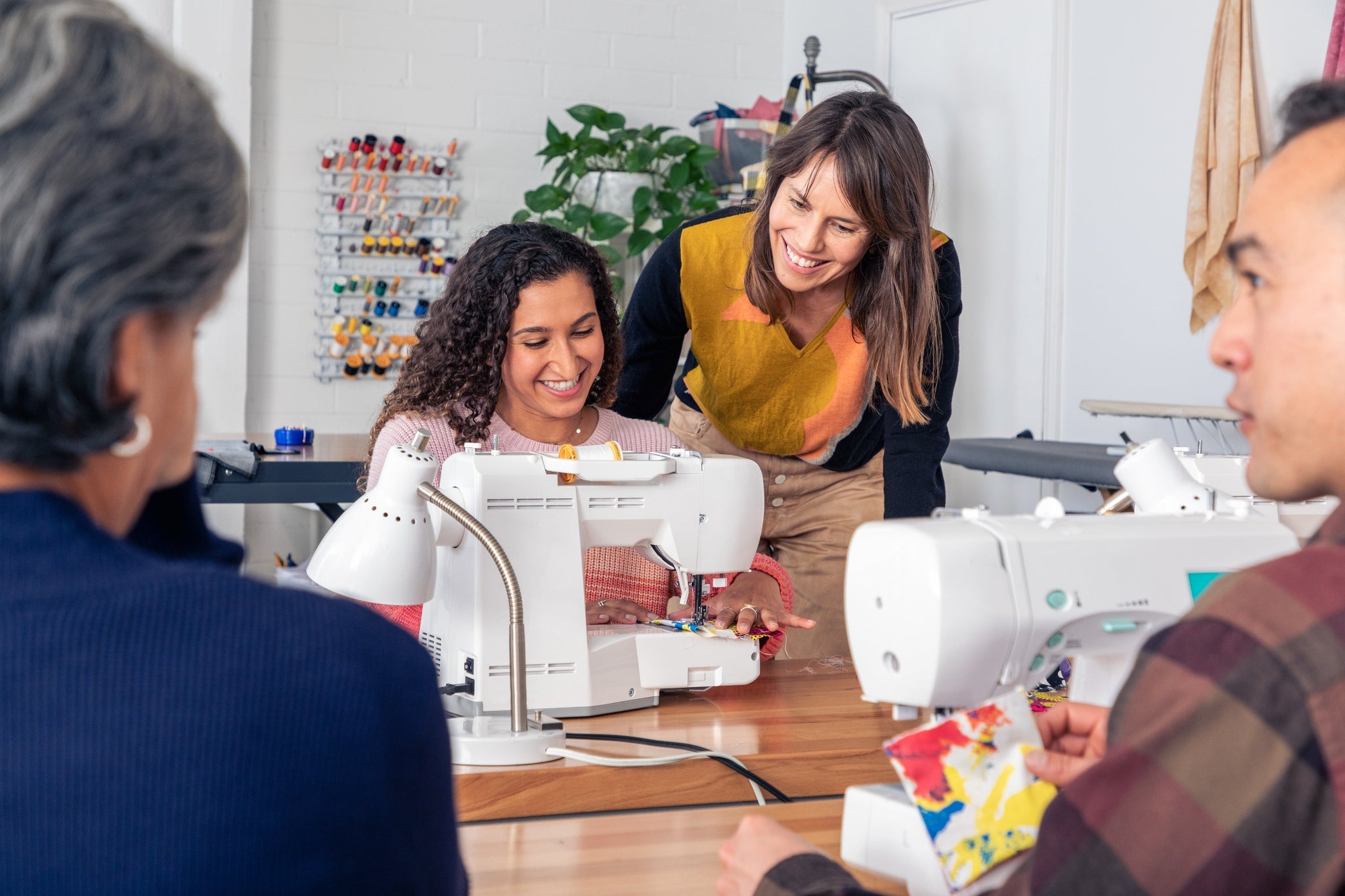
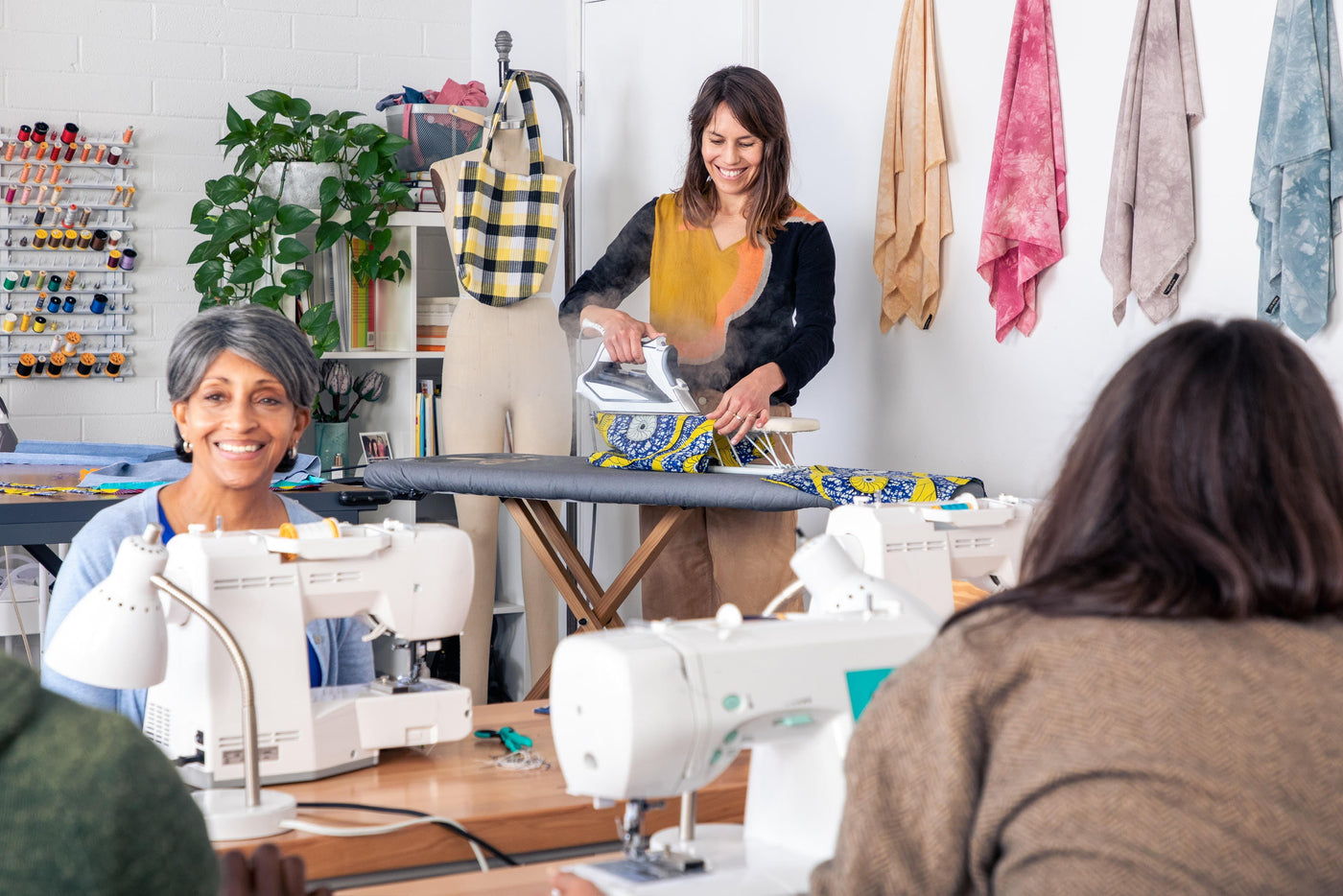
If you are in Los Angeles, Moving Thread offers sewing workshops and classes where you can build practical sewing skills in a creative studio environment.
For more individual guidance on a particular project or pattern, you can also explore a private sewing workshop.
Start With a Simple Pattern and Build Your Skills
The best sewing patterns for beginners are not necessarily the most exciting-looking patterns on the shelf. They are the ones that allow you to understand the construction process, practice accurate sewing and successfully finish a project.
Start with a pattern that uses simple shapes, stable fabric and clear instructions. Learn how to choose your size, understand the markings, position the pieces correctly and follow the construction order.
Once those basics feel familiar, more advanced patterns become much easier to approach. If you want practical guidance while developing your skills, explore Moving Thread's sewing classes and workshops in Los Angeles.
Frequently Asked Questions
What sewing pattern is best for a beginner?
A beginner-friendly pattern with few pieces, simple seams and minimal fitting is usually the easiest place to start. Tote bags, elastic-waist skirts, aprons and loose-fitting tops are good examples.
How do I know what size sewing pattern to use?
Take your body measurements and compare them with the size chart included with the pattern. Do not rely only on the clothing size you normally buy in stores because pattern sizing can differ.
What do notches mean on a sewing pattern?
Notches are small markings that help you match corresponding fabric pieces correctly during construction.
Do sewing patterns include seam allowance?
Some patterns include seam allowance and others do not. Always check the instructions before cutting or sewing so that you know exactly what the pattern requires.
Can beginners make clothes from sewing patterns?
Yes. Beginners can successfully make clothing from patterns if they choose simple designs, follow the measurements carefully and work through the instructions one step at a time.