
Learning how to use a sewing machine can feel intimidating when you are looking at the controls, thread guides, bobbin and needle for the first time. Once you understand what each part does and follow the setup process in the right order, however, machine sewing becomes much easier.
You do not need to understand every stitch or setting before you begin. Start by learning how to set up the machine, thread it correctly, control your sewing speed and sew a straight line. Those simple skills create the foundation for almost every project you will make later.
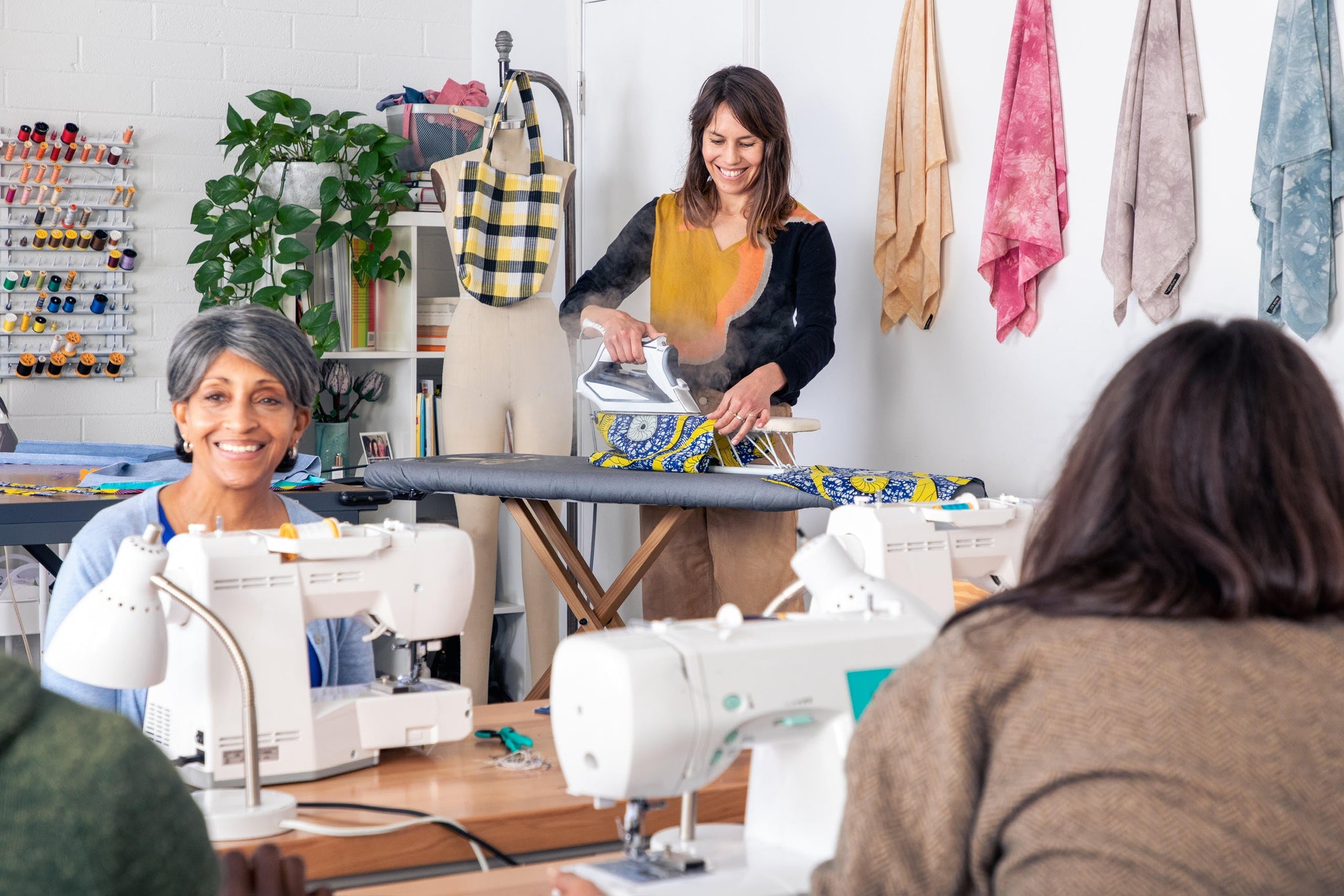
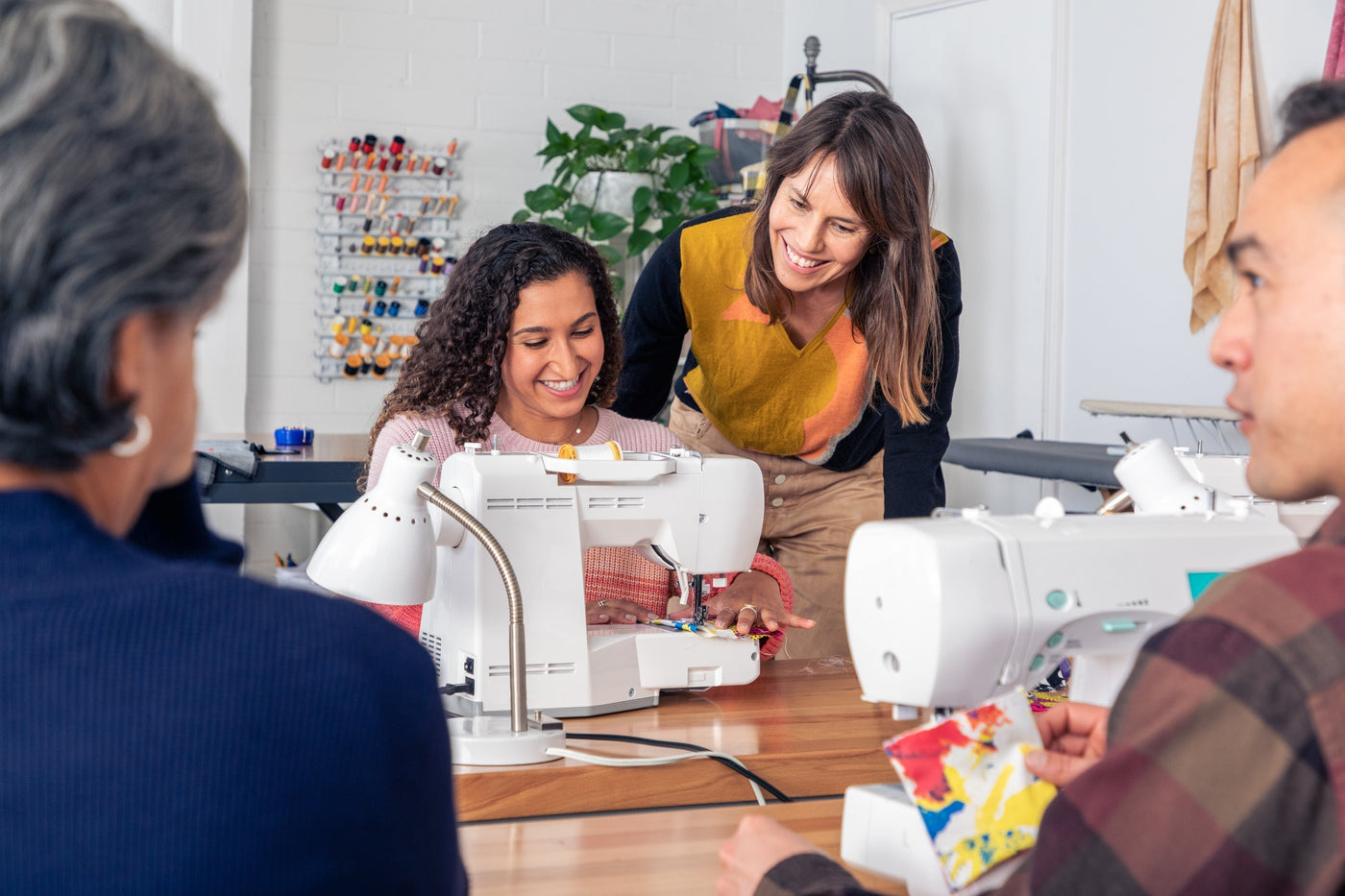
If you would rather learn with hands-on guidance, Moving Thread offers an Intro to Sewing class in Los Angeles where complete beginners learn how to set up and thread a sewing machine, practice basic stitches and complete a beginner project.
What Should You Know Before Using a Sewing Machine?
Before you start sewing, become familiar with the main parts of your machine. Designs vary between models, but most domestic sewing machines use the same basic components.
| Machine Part | What It Does |
|---|---|
| Spool pin | Holds the upper thread spool. |
| Bobbin | Supplies the lower thread used to form stitches. |
| Needle | Carries the upper thread through the fabric. |
| Presser foot | Holds the fabric in position while you sew. |
| Handwheel | Raises and lowers the needle manually. |
| Foot pedal | Controls when the machine sews and usually how quickly it runs. |
| Stitch controls | Allow you to select stitch type, length and other settings. |

How Do You Set Up a Sewing Machine?
Place your sewing machine on a stable table with enough room for fabric to move freely around the machine. Connect the power cable and foot pedal according to the instructions for your model.
Before sewing, make sure the presser foot and needle are fitted correctly and that the machine is switched off while you are working around the needle area.
Every model is slightly different, so your machine manual should always be your first reference for the exact threading path, bobbin direction and recommended settings. You can also learn more about the development and basic mechanics of the sewing machine.
How Do You Thread a Sewing Machine?
Correct threading is one of the most important parts of learning how to use a sewing machine. Incorrect threading can cause loose stitches, tangled thread, skipped stitches or thread bunching underneath the fabric.
- Raise the presser foot and needle.
- Place your thread spool on the spool pin.
- Follow the numbered thread guides on the machine.
- Guide the thread through the tension system and take-up lever.
- Thread the needle in the direction specified by your machine.
- Insert a correctly wound bobbin into the bobbin area.
- Bring the bobbin thread up if your machine requires it.
Do not rush this step. If the machine suddenly starts producing messy stitches, rethreading both the upper thread and bobbin is often a useful first troubleshooting step.
How Do You Start Sewing With a Sewing Machine?
Start with a scrap piece of stable woven fabric rather than beginning immediately on an important project. Place the fabric underneath the presser foot, lower the foot and position the needle where you want your stitching to begin.
- Select a basic straight stitch.
- Use a moderate stitch length recommended by your machine.
- Lower the presser foot before sewing.
- Press the foot pedal gently.
- Guide the fabric rather than pulling it.
- Keep your fingers safely away from the needle.
The feed dogs underneath the presser foot are designed to move the fabric through the machine. Your hands should guide the direction of the fabric rather than force it forward.

Which Sewing Machine Stitches Should Beginners Learn First?
You may have dozens of stitch options available, but beginners only need a few to get started.
Straight Stitch
The straight stitch is one of the most commonly used machine stitches. It is suitable for many basic seams and is the best place to start practicing control and consistent seam allowances.
Zigzag Stitch
A zigzag stitch can be useful for finishing certain raw fabric edges and for projects that require more flexibility than a standard straight stitch.
Backstitch
Backstitching at the beginning and end of a seam helps secure the stitching. Most modern machines have a reverse control that allows you to sew backward for a short distance.
For a broader introduction to these foundations, read our guide to sewing basics for beginners.
How Can You Practice Sewing Machine Control?
Machine control improves through repetition. Before attempting clothing or a complicated pattern, practice sewing straight lines, corners and gentle curves on scrap fabric.
- Sew several straight parallel lines.
- Practice stopping with the needle in the fabric.
- Turn corners by raising the presser foot and pivoting the fabric.
- Experiment with slower and faster pedal pressure.
- Practice keeping an even distance from the fabric edge.
Once you feel comfortable controlling the machine, a simple tote bag, pouch or similar project gives you the opportunity to use those skills in a practical way. Moving Thread's 4-week beginner sewing workshop builds these skills through several hands-on projects.
Common Sewing Machine Problems Beginners Experience
| Problem | What to Check First |
|---|---|
| Thread bunching underneath | Check the upper threading and confirm the presser foot was raised while threading. |
| Thread keeps breaking | Rethread the machine and inspect the needle and thread path. |
| Skipped stitches | Check whether the needle is correctly installed, damaged or unsuitable for the fabric. |
| Fabric will not move | Make sure the presser foot is lowered and check the feed-dog setting. |
| Machine will not sew | Check the power connection, foot pedal and machine setup before assuming there is a mechanical fault. |
If you are still choosing your first machine, our guide to the best sewing machines for beginners explains which features are actually useful when you are starting out.

Is It Better to Learn Sewing at Home or Take a Class?
You can certainly learn many sewing skills through practice at home. The difficult part for many beginners is knowing whether a problem comes from the machine, the threading, the fabric, the needle or simply their technique.
Hands-on instruction allows someone experienced to identify those small problems while you are sewing. Moving Thread's beginner classes are designed for people with little or no previous sewing experience, and machines and equipment are provided for the introductory workshops.
If you prefer individual guidance or have a particular project you want help with, a private sewing workshop is another option.
Start With the Basics and Build From There
Learning how to use a sewing machine is not about mastering every setting at once. Learn how to thread the machine correctly, practice a straight stitch, get comfortable controlling the fabric and complete one simple project.
Once those skills become familiar, patterns, garment construction, alterations and more creative sewing projects become much easier to approach.
If you are in Los Angeles and want practical guidance from the beginning, explore Moving Thread's Intro to Sewing class for beginners and start building your sewing confidence through hands-on practice.
Frequently Asked Questions
Is it difficult to learn how to use a sewing machine?
Most beginners can learn the basic controls, threading process and straight stitching with practice. The key is learning one skill at a time instead of trying to understand every machine feature immediately.
What stitch should a beginner use first?
A basic straight stitch is usually the best starting point. It allows beginners to practice controlling the machine, guiding fabric and maintaining a consistent seam allowance.
Do I need my own sewing machine to learn?
No. Moving Thread provides sewing machines and equipment for its introductory beginner sewing workshops, so you can learn the basics before deciding whether to purchase your own machine.
Why does my sewing machine thread keep getting tangled?
Thread tangles can have several causes, but incorrect upper threading or bobbin setup are useful first things to check. Rethread the machine carefully according to its manual before changing other settings.
What is a good first sewing machine project?
A simple tote bag is a good beginner project because it allows you to practice straight seams, basic construction and machine control without requiring advanced techniques.