
Sewing bag patterns can turn a simple piece of fabric into something useful, personal and completely your own.
A bag can be one of the most satisfying sewing projects to make. It does not have to fit a body perfectly. It can be tiny or oversized, soft or structured, simple or detailed. You can make one from colorful cotton, sturdy canvas, leftover fabric, old clothing or a combination of materials that would otherwise stay forgotten in your sewing pile.
For DIY craft lovers, exploring different sewing bag patterns is also a wonderful way to build practical sewing skills. A simple tote can teach straight seams and handles. A zippered pouch introduces closures and lining. A crossbody bag adds straps, pockets and more structured construction.
At Moving Thread LA, beginner sewing projects are designed to help students become comfortable with the sewing machine while making pieces they can actually use. Bags are especially rewarding because the finished project can immediately become part of everyday life.
Why Bags Are So Much Fun To Sew
There is something particularly satisfying about sewing a bag.
You begin with flat pieces of fabric. Then seams create shape. Handles appear. A lining hides the inside construction. A zipper, pocket or drawstring suddenly makes the project functional. Before long, the fabric on your table has become an object you can carry around.
Bags also leave plenty of room for creativity.
The same sewing bag patterns can look completely different depending on the fabric, size and details you choose. A basic tote made from natural canvas feels practical and minimal. Make the same design in bold printed cotton and it becomes playful. Add contrasting handles, a patch pocket or decorative stitching and it changes again.
Unlike some sewing projects, bags also allow you to experiment without worrying too much about perfect fit. That makes them a great space for learning, testing ideas and becoming more confident at the machine.
What Types Of Sewing Bag Patterns Can You Make?
There are almost endless types of sewing bag patterns, but most designs build on a handful of useful construction ideas.
Some bags are made from simple rectangles. Others use shaped pattern pieces, boxed corners, curved seams or structured panels. Some are left unlined while others use separate exterior and lining layers. Closures can range from nothing at all to zippers, buttons, magnetic snaps and drawstrings.
Here are some of the most interesting bag styles to explore.
The Classic Tote Bag
The tote bag is one of the best places to begin.
At its simplest, a tote is made from two main fabric panels joined together with handles attached at the top. That uncomplicated structure makes it approachable for beginners while still leaving plenty of space for experimentation.
A tote can be made small enough for books or large enough for groceries, fabric supplies or a day at the beach.
You can also add:
- Patch pockets
- Contrasting handles
- A full fabric lining
- Boxed corners for extra depth
- Decorative topstitching
- Interior compartments
- A button or magnetic closure
A tote is particularly useful for learning because you can clearly see how flat fabric becomes a three-dimensional object.
Moving Thread LA’s Intro to Sewing class gives complete beginners the opportunity to learn essential machine-sewing techniques while completing a simple tote bag project.
The Zippered Pouch
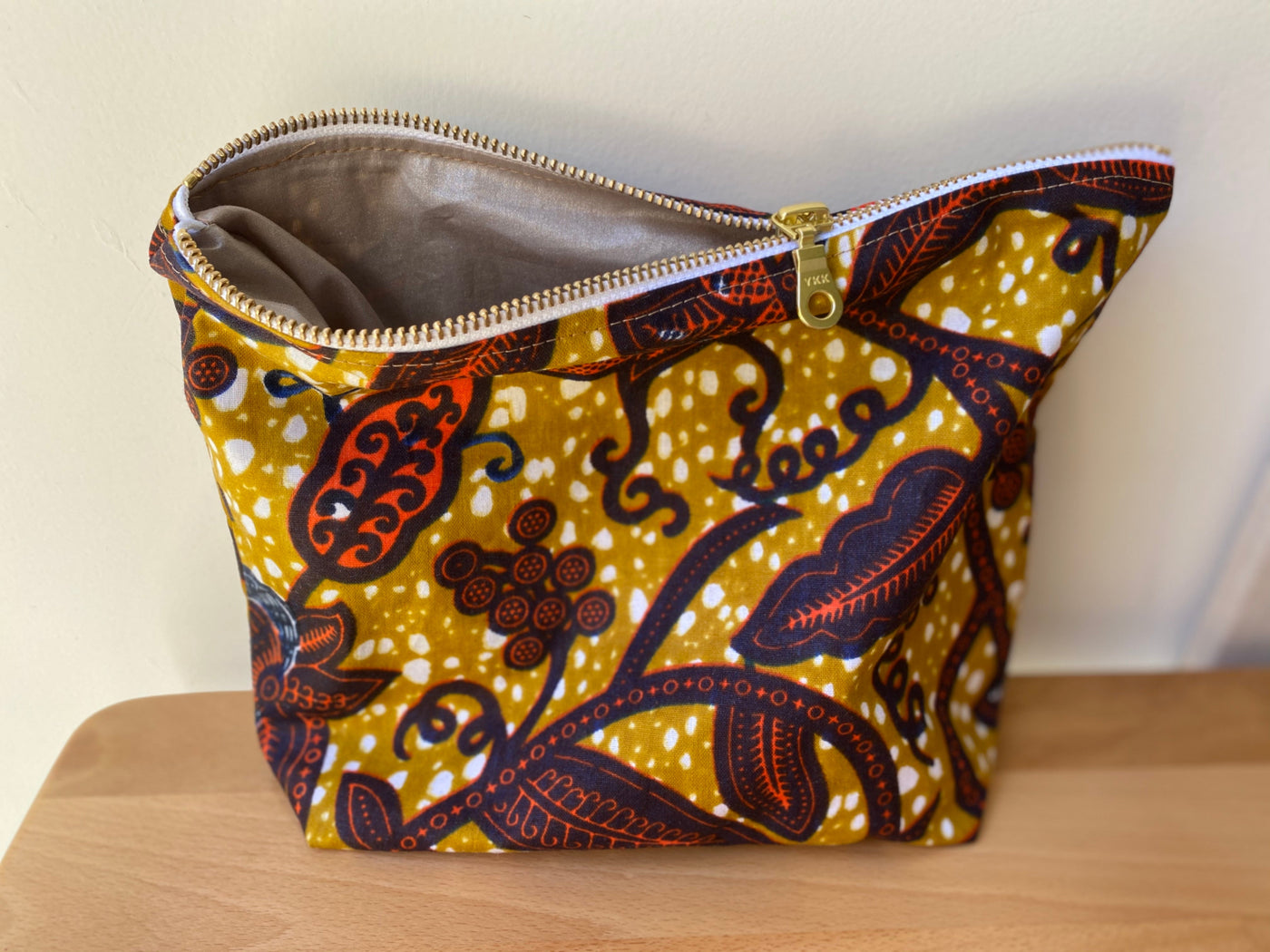
A zippered pouch may be small, but it can teach a surprising number of sewing skills.
These little bags are useful for makeup, art supplies, sewing notions, chargers, pencils, travel items or the mysterious collection of tiny objects that always seems to gather at the bottom of a larger bag.
Most zippered sewing bag patterns involve an outer fabric, lining and zipper. That means the maker needs to think about construction order. The pieces have to be layered and sewn in a particular sequence so that the finished seams are hidden neatly inside.
This is what makes the zippered pouch such a useful next project. It introduces complexity without becoming overwhelming.
Once you understand the basic construction, you can experiment with different sizes, fabrics and shapes.

The Drawstring Bag
Drawstring bags are simple, practical and wonderfully adaptable.
Instead of using a zipper or button, the top edge contains a channel through which cord, ribbon or fabric ties can slide. Pull the ties and the bag closes.
Small versions can hold jewelry, gifts or sewing supplies. Medium versions make useful project bags. Larger versions can become laundry bags, backpacks or storage sacks.
Drawstring sewing bag patterns are also a good place to experiment with fabric combinations. Try one fabric on the bottom and another on top, add a contrast lining or create the drawstring itself from coordinating fabric.
The basic shape may be simple, but color and print can completely transform the result.
The Crossbody Bag
Once you feel comfortable sewing basic bags, a crossbody design can introduce a new level of construction.
Crossbody bags often include a long strap and more defined shaping than a basic tote. Depending on the design, they may also include zippers, pockets, flaps, hardware or adjustable straps.
This makes them interesting for DIY makers who are ready to think more carefully about how all the parts of a bag work together.
Where should the strap sit?
How wide should the bag be?
Does it need a pocket for a phone?
Should the opening use a zipper, snap or flap?
These questions turn sewing into design.
The Shoulder Bag
A shoulder bag sits somewhere between a tote and a crossbody bag.
It usually has one or two straps long enough to sit comfortably over the shoulder, while the body can range from very relaxed to highly structured.
Soft fabric shoulder bags can have a casual, slouchy feeling. A bag made with interfacing and heavier fabric can hold a much more defined shape.
This makes shoulder sewing bag patterns a good way to discover how fabric choice affects construction.
The pattern matters, but the material matters too.
The Bucket Bag
Bucket bags introduce volume.
Instead of simply joining two flat rectangles, the maker may create a circular or oval base and attach the bag body around it. Many designs finish with a drawstring closure at the top.
This construction begins to teach an important sewing concept: fabric can be shaped.
Once you learn how seams create volume, bag-making becomes much more interesting. You start to understand why different pattern pieces are shaped the way they are and how those shapes interact when stitched together.
The Backpack
A backpack can be one of the more ambitious sewing bag patterns, but it is also one of the most rewarding.
Simple backpacks can be little more than drawstring bags with straps. More advanced designs may contain multiple panels, padded straps, zippers, pockets and structured sections.
Backpacks are particularly interesting because function becomes extremely important.
The straps need to be secure. The opening needs to work smoothly. Pockets need to be placed where they are actually useful. The fabric needs to suit what you plan to carry.
Suddenly you are not just sewing a shape. You are solving practical design problems.
Different Sewing Bag Patterns And What They Teach
Every bag introduces slightly different techniques. Choosing projects based on the skills you want to practise can help your sewing develop naturally.
| Bag Pattern | What Makes It Interesting | Skills It Can Help Build |
|---|---|---|
| Tote bag | Simple, practical and easy to customize | Straight seams, handles and basic construction |
| Zippered pouch | Small project with a polished finish | Zippers, lining and construction order |
| Drawstring bag | Simple closure with many possible sizes | Channels, casing and fabric ties |
| Crossbody bag | Functional everyday design | Straps, pockets, closures and structure |
| Shoulder bag | Can be soft, oversized or structured | Fabric choice, lining and strap construction |
| Bucket bag | Creates volume using shaped pieces | Curves, bases and three-dimensional construction |
| Backpack | Combines multiple practical elements | Planning, straps, compartments and closures |
| Scrap bag | Turns small leftover pieces into a new design | Patchwork, color placement and creative reuse |
Why Fabric Changes A Bag Completely
One of the most creative parts of using sewing bag patterns is choosing fabric.
A pattern tells you how the pieces fit together, but fabric gives the finished bag its personality.
Lightweight cotton is easy to handle and works beautifully for many beginner projects. Canvas can give totes and utility bags more body. Denim can make a bag feel sturdy and casual. Quilted fabric adds texture and softness. Old clothing can introduce details and memories that cannot be found on a bolt of new material.
The important thing is to think about what the bag needs to do.
A tiny drawstring bag does not need the same strength as a grocery tote. A structured shoulder bag needs different support from a soft fabric pouch. A backpack carrying heavier objects needs stronger seams and straps than a decorative gift bag.
Good sewing is partly about understanding these relationships between pattern, material and purpose.

Sewing Bags From Fabric Scraps
Some of the most exciting bags begin with fabric that was never intended to become a bag.
Leftover pieces from garment projects can become pockets, panels or patchwork. Old denim can become a sturdy tote. A shirt with an interesting print can provide fabric for a pouch. Small pieces that seem useless alone can be stitched together until they are large enough to become something completely new.
This makes sewing bag patterns perfect for experimenting with creative reuse.
Instead of starting by asking, “What fabric should I buy?” try asking, “What fabric do I already have?”
The limitation can become part of the design.
How To Make A Basic Bag Feel Completely Your Own
You do not need a complicated pattern to create an interesting bag.
Sometimes one thoughtful detail can change everything.
Try:
- Making the handles in a contrasting fabric.
- Adding an oversized exterior pocket.
- Using two different fabrics for the front and back.
- Piecing scraps together before cutting the pattern.
- Adding decorative stitching.
- Changing the proportions of a simple tote.
- Using a bold lining that is only visible when the bag opens.
- Adding a personalized label or embroidered detail.
- Turning old clothing into part of the bag.
- Adding boxed corners to create extra depth.
This is where sewing bag patterns become starting points instead of strict rules.
You learn the construction first. Then you begin asking what you can change.
What Makes A Good Beginner Bag Pattern?
If you are new to sewing, the most impressive-looking pattern is not necessarily the best one to choose first.
A good beginner project usually has relatively few pattern pieces, mostly straight seams and simple construction steps. The goal is to understand what you are doing rather than spending the entire project fighting with complicated details.
Look for sewing bag patterns that allow you to practise:
- Accurate cutting
- Sewing consistent seam allowances
- Keeping seams straight
- Pressing correctly
- Turning corners neatly
- Attaching handles
- Finishing raw edges
Once those skills begin to feel natural, adding lining, zippers, pockets, curves and hardware becomes much easier.
Why A Tote Is Such A Useful First Sewing Project
A tote might look basic, but that simplicity is exactly what makes it valuable.
When you are learning to sew, there is already a lot happening. You are becoming familiar with the machine, learning how the fabric feeds, understanding seam allowance, controlling your stitching and discovering why pressing matters.
A simple bag gives you room to concentrate on those fundamentals.
Moving Thread LA’s Intro to Sewing workshop introduces complete beginners to the sewing machine and basic stitches while working toward a finished tote bag.
For makers who want to continue developing those skills, the Intro to Sewing 4 Week Workshop builds on the fundamentals through several projects, including a reversible tote and lined zippered pouch.
That progression makes sense: start with basic construction, add a new technique, then keep building.

From Following Patterns To Designing Your Own Bags
After sewing several bags, something interesting begins to happen.
You start noticing how they are constructed.
You look at a tote in a store and recognize the boxed corners. You notice where a strap has been attached. You turn a pouch inside out and understand how the lining was assembled. You begin thinking about what you would change.
This is one of the best things about exploring different sewing bag patterns.
Patterns teach more than how to make one object. They teach construction logic.
Eventually, you may decide that you want the bag wider, the straps longer or the pocket deeper. Maybe you want to combine the body of one design with the closure from another.
That is the moment when following a pattern starts becoming design.
Which Bag Should You Sew First?
Your first bag does not need to be your dream bag.
Choose something that teaches the next skill you want to understand.
- Choose a tote bag if you are completely new to machine sewing.
- Choose a drawstring bag if you want a simple project with a useful closure.
- Choose a zippered pouch if you are ready to learn zippers and lining.
- Choose a shoulder bag if you want to experiment with shape and structure.
- Choose a crossbody bag if you want to work with straps, pockets and closures.
- Choose a bucket bag if you want to practise creating volume and sewing curves.
- Choose a backpack when you are ready for a more involved construction challenge.
The best sewing bag patterns are the ones that make you curious enough to start cutting fabric.
Ready To Start Sewing?
Bags are useful, creative and endlessly customizable. A simple rectangle can become a tote. A few carefully placed seams can create depth. A zipper can turn two pieces of fabric into a pouch you carry for years.
Start with a straightforward project and let your skills grow from there.
Try different fabrics. Add pockets. Play with proportions. Use scraps. Make another version and change something. The more sewing bag patterns you explore, the more clearly you begin to understand how sewing and design work together.
If you are new to sewing and want to become comfortable using a sewing machine, explore Moving Thread LA’s beginner workshops:
Intro to Sewing 4 Week Workshop
Your first bag may begin with nothing more than fabric, thread and a simple pattern. But once you carry something you made yourself, it becomes very difficult not to start imagining the next one.