
Fashion design for kids gives young creatives the chance to take an idea from their imagination and discover what happens when drawing, color, fabric and sewing all come together. A child might begin with a sketch of a dream dress, a favorite color combination or an idea for a completely original outfit. From there, the real adventure begins: choosing materials, understanding shapes, learning how clothing is constructed and eventually turning a flat piece of fabric into something they can actually wear.
That process is what makes fashion design so exciting for children. It is not simply about drawing pretty clothes. It combines art, problem-solving, practical skills and personal expression.
For kids who already love sketching outfits, playing with different styles or wondering how clothes are made, fashion design can give those interests somewhere to grow. They begin to discover that every garment starts with decisions: What is the idea? Who is it for? How should it move? What fabric will work? How do all the pieces fit together?
At Moving Thread LA in Los Angeles, young designers can explore those questions through hands-on sewing and fashion experiences that take creativity beyond the sketchbook and into the studio.
How Do Kids Actually Learn Fashion Design?
Kids learn fashion design by moving gradually from imagination to practical making. They begin with inspiration and ideas, then explore color, drawing, fabric, sewing and garment construction as their skills develop.
Professional fashion may look complicated from the outside, but the basic creative process is easy for children to understand. Designers look for inspiration. They experiment with ideas. They sketch. They make choices about color and materials. Then they work out how the design can become a real garment.
For a young designer, those steps can be playful rather than formal. Inspiration might come from a favorite movie, an animal, a city, a flower, music, a historical period or simply a collection of colors they love.
The important part is learning that an idea does not need to appear perfectly formed. Fashion develops through experimenting, changing things and discovering what works.

Fashion Design for Kids Often Starts With Inspiration
Fashion design for kids often starts long before anyone touches a sewing machine. The first step is usually discovering an idea worth exploring.
An inspiration board can help children collect that idea visually. They might combine photographs, fabric swatches, drawings, colors, textures and shapes that share a particular feeling. One board could be filled with bright tropical colors. Another might be inspired by outer space, vintage clothing, street style or the ocean.
This teaches an important design lesson: clothing does not exist in isolation. Designers build collections around moods, stories and visual connections.
Color stories work in a similar way. Instead of choosing every color available, kids can experiment with a smaller palette and see how those colors interact. A few carefully chosen colors can make a collection feel connected even when the individual garments are very different.
Why Is Fashion Sketching Important?
Fashion sketching gives children a quick way to explore clothing ideas before trying to make them. A sketch does not need to be perfect or realistic to be useful.
One of the most freeing lessons in fashion design is that drawing is a tool for thinking. Children can change a sleeve, make a skirt longer, add pockets, remove a collar or try five completely different versions of an outfit without cutting a single piece of fabric.
This encourages experimentation.
A young designer might start with one simple dress and then ask:
- What happens if the skirt becomes fuller?
- Would it look different with short sleeves?
- Could the pockets become the main feature?
- What if the colors were completely reversed?
- Could the same idea become a top instead?
Those questions are design thinking in action. Kids begin learning that there is rarely only one correct creative solution.
How Do Kids Learn About Fabric?
Kids learn about fabric by touching it, comparing it and seeing how different materials behave. Fabric choice is one of the moments when fashion moves from an idea on paper toward something physical.
A stiff fabric behaves differently from something soft and flowing. A heavy material creates a different shape from a lightweight one. Stretchy fabric presents different challenges from woven fabric.
Young designers do not need to memorize every fabric name immediately. What matters first is developing curiosity. How does this fabric feel? Does it drape or hold its shape? Does it stretch? Would it make sense for the garment being imagined?
That turns fabric selection into part of the creative process rather than simply choosing the prettiest print.
When Does Sewing Become Part of Fashion Design?
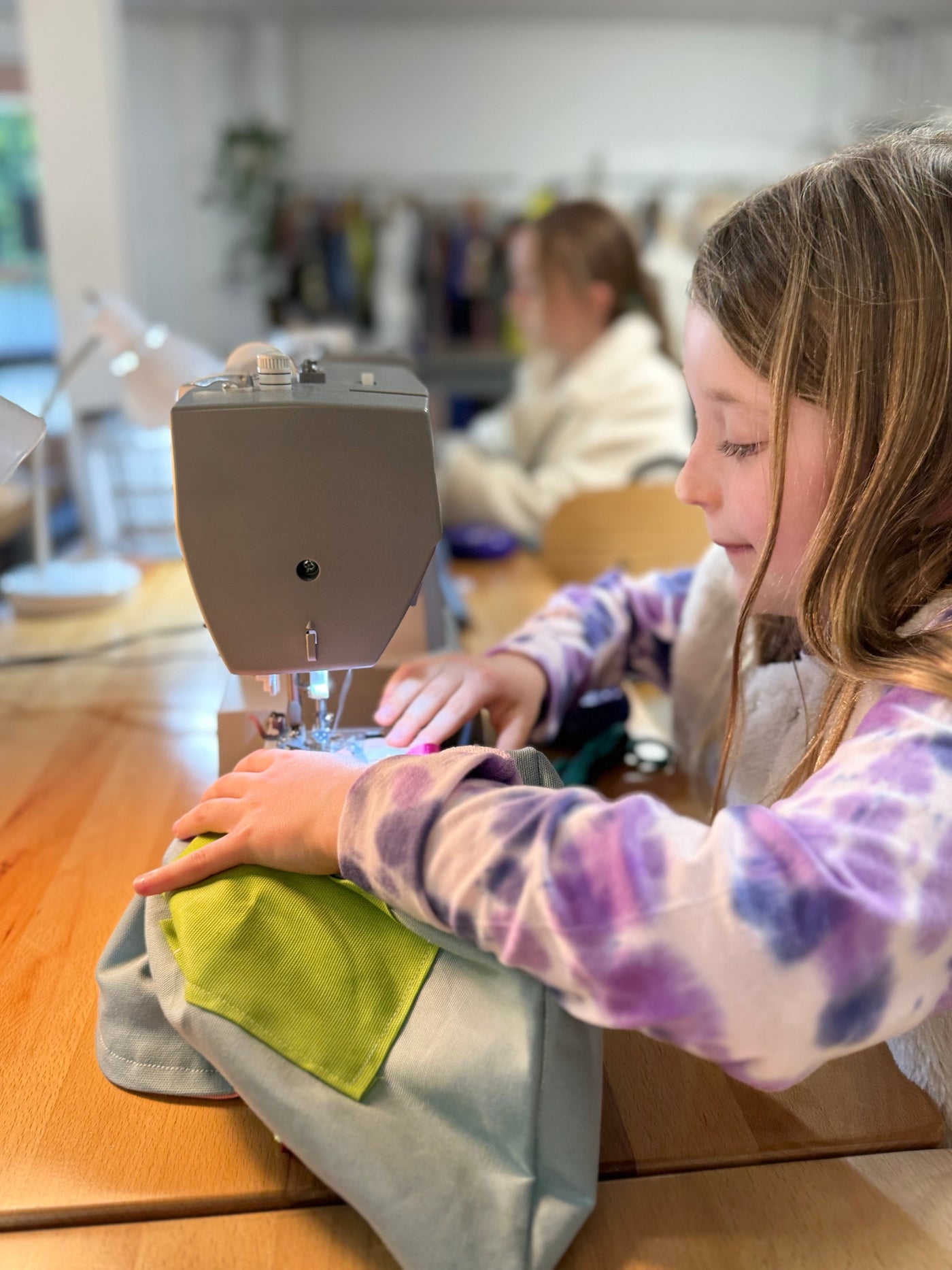
Sewing becomes the bridge between a fashion idea and a finished object. It teaches children how two-dimensional fabric pieces can be joined together to create a three-dimensional garment.
This can feel almost like magic the first time it happens.
A child sees separate pieces of fabric on the table. Then seams begin to connect them. A shape appears. Open edges are finished. Details are added. Eventually, something that existed only as an idea can be held up, tried on and worn.
Learning sewing also introduces patience into fashion design for kids. Machines need to be threaded correctly. Seams need attention. Fabric sometimes moves in unexpected ways. Mistakes happen.
That is not separate from the creative experience. Learning how to fix, adjust and try again is part of making.

What Skills Can Young Fashion Designers Explore?
Young fashion designers can explore far more than drawing and sewing. Fashion brings together a collection of creative and practical skills that naturally build on one another.
| Fashion Design Skill | What Kids Explore | Creative Project Idea |
|---|---|---|
| Inspiration boards | Mood, theme, images and visual storytelling | Create a board for a mini clothing collection |
| Color stories | How colors work together | Choose five colors for a collection |
| Fashion illustration | Shape, proportion and clothing ideas | Sketch several looks around one theme |
| Fabric selection | Texture, weight, drape and color | Pair fabric swatches with different designs |
| Machine sewing | Construction and basic stitching | Make a simple wearable piece |
| Embellishment | Detail, decoration and personal style | Customize a finished garment |
| Styling | How individual garments create a complete look | Style and present a mini collection |
Why Are Finished Projects So Exciting for Kids?
Finished projects give children something physical that connects their imagination with the work they put into learning a new skill.
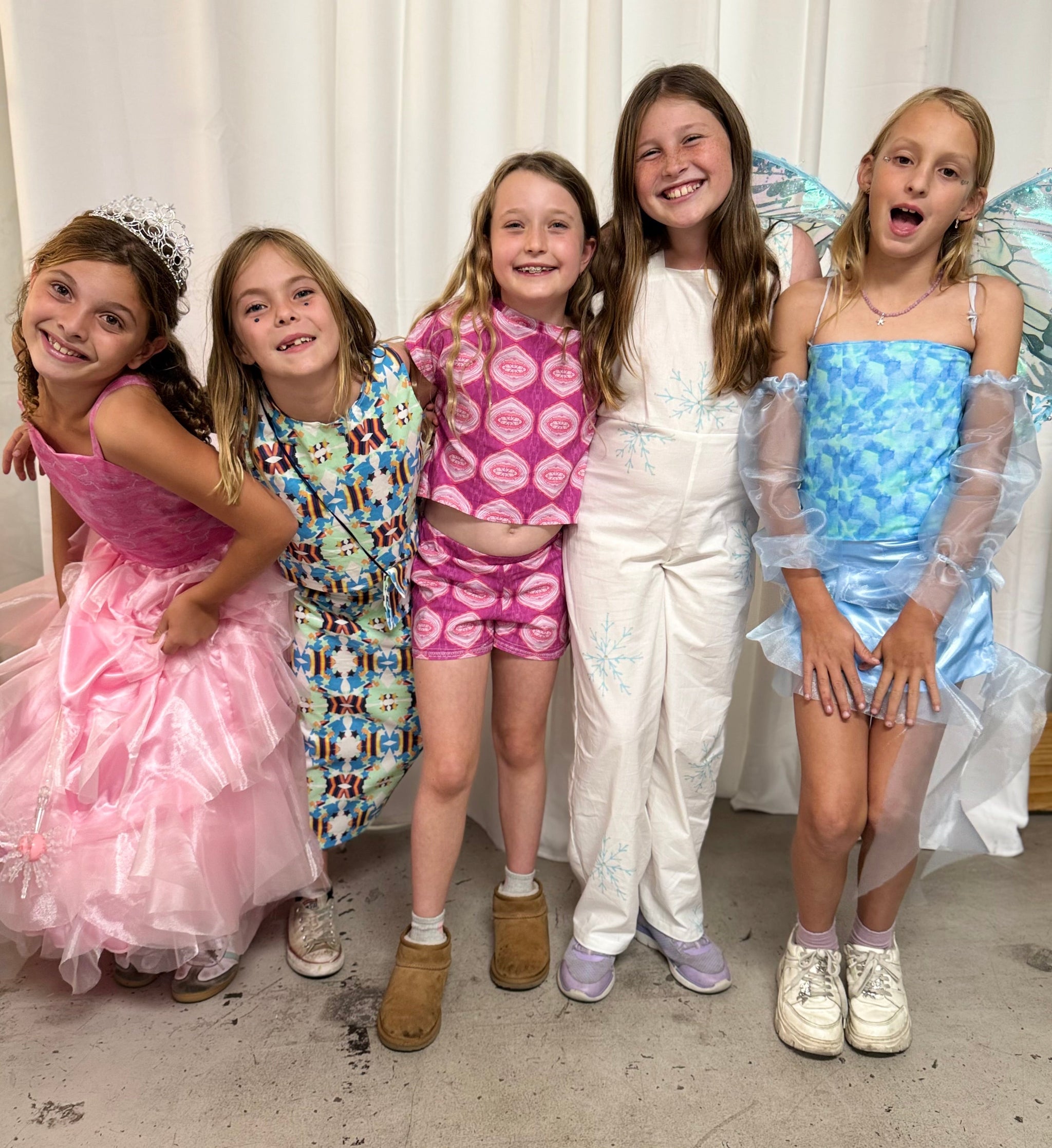
A drawing is exciting, but wearing something you helped design takes the experience further. The project becomes real. A child can look at a skirt, top, dress, pair of shorts or other piece and remember the decisions behind it.
They chose the idea. They considered the colors. They worked with the fabric. They learned new steps. They probably had to fix something along the way. Then they finished it.
This is one reason hands-on projects work so well when introducing fashion design for kids. Instead of only learning terminology, children experience design through making.
Creative Fashion Projects Kids Can Try
Children do not need to begin by creating an entire collection. Small fashion projects can introduce the same creative thinking in a manageable way.
- Create an inspiration board for an imaginary clothing collection.
- Design three outfits using only four or five colors.
- Sketch the same garment in several completely different styles.
- Collect fabric swatches and match each one to a suitable clothing idea.
- Redesign an old T-shirt on paper before altering or embellishing it.
- Create an outfit inspired by a favorite place, season, animal or story.
- Design a collection for an imaginary character.
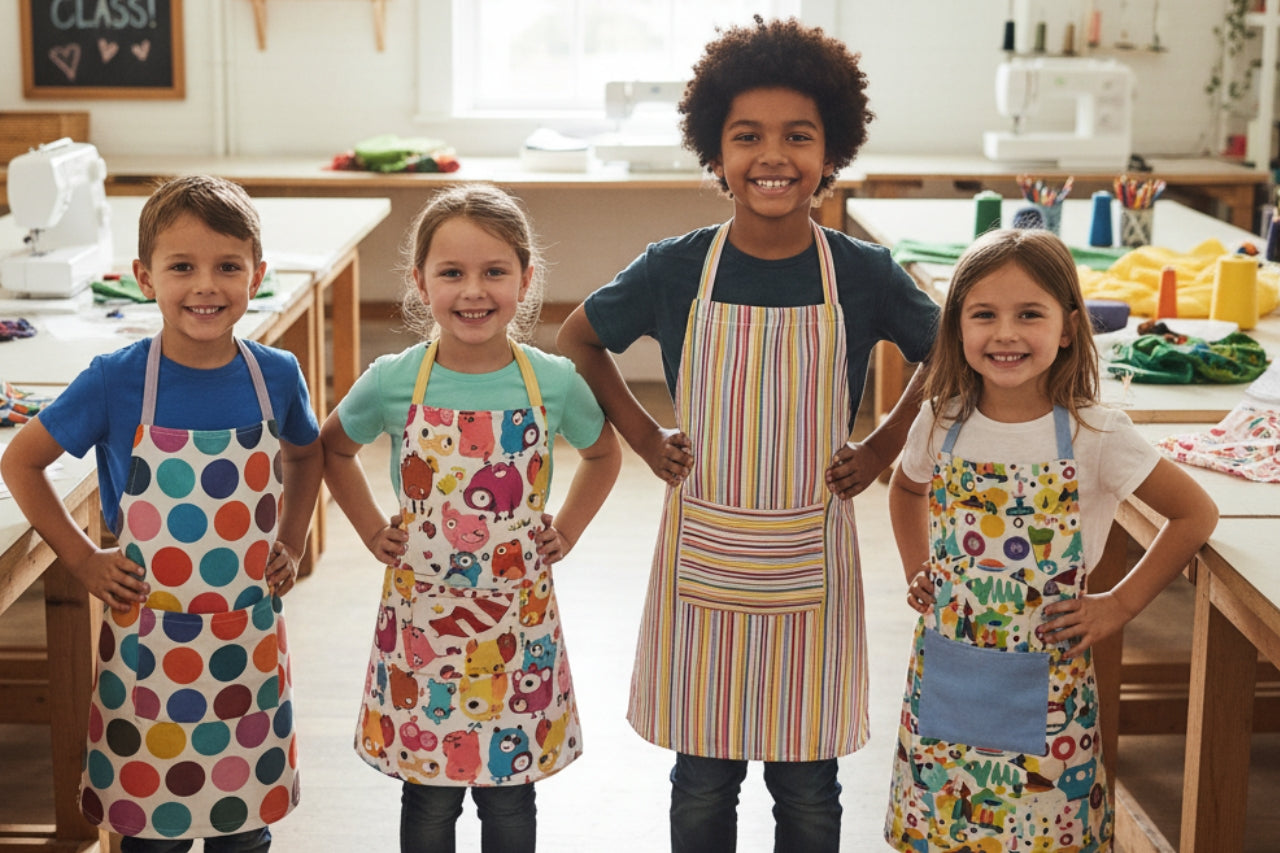
- Make a simple sewn accessory before progressing to clothing.
- Add decorative details or embellishments to an existing garment.
- Create several coordinated looks and present them as a mini collection.
The goal is not to make every project complicated. Good creative projects give children enough structure to begin and enough freedom to make their own decisions.
How Does Moving Thread LA Introduce Kids to Fashion Design?
Moving Thread LA gives young designers opportunities to experience fashion as a complete creative process rather than only a drawing exercise.
The STITCHED Fashion Camp at Moving Thread is designed for kids ages 8 to 13 and explores fashion sketching, inspiration boards, color stories, hand and machine sewing, garment construction, embellishment and styling. Campers create an illustrated collection and work on wearable pieces before finishing the experience with a family-friendly fashion show. No previous sewing experience is required for the current camp program.
For children ages 8 to 12 who already have basic sewing experience and want to go deeper into the design process, the Kids Fashion Series with Rob Younkers works through concept development, inspiration boards, color and fabric stories, design journaling, fashion illustration, custom textile ideas and collection pieces.
Children who would feel more comfortable learning alongside an adult can also begin with the Parent and Child Intro to Sewing, a beginner workshop for children ages 8 to 12 accompanied by a parent or guardian.

Fashion Design Teaches Kids to See Clothes Differently
Once children understand how clothing is designed and constructed, a T-shirt or dress stops being just another object on a rack.
They start noticing seams. They notice fabric. They wonder how sleeves are attached or why one garment hangs differently from another. They begin recognizing that someone had to make decisions about every shape, stitch, color and detail.
That awareness is part of the magic of fashion design for kids. It changes clothing from something children simply consume into something they can understand, question and perhaps eventually create themselves.
It can also encourage a more thoughtful relationship with clothes. When a child has spent time designing and sewing something, the amount of work behind a garment becomes much easier to appreciate.
There Is No Single Way to Be a Young Designer
Some children are fascinated by the sewing machine. Others could sketch outfits for hours. One child may love dramatic colors while another becomes obsessed with tiny construction details.
All of those interests can belong in fashion.
The best introduction to fashion design gives kids room to discover what part of the process excites them. They do not need to know whether they want to become professional designers. They do not even need to be certain that fashion will remain their favorite activity.
They simply need the opportunity to explore.
A sketch can lead to a fabric choice. Fabric can lead to a sewing lesson. A sewing lesson can lead to a first garment. And one finished garment can lead to the next big idea.
Ready to Explore Fashion Design for Kids?
Fashion design for kids is where imagination meets practical making. Children learn that a creative idea can travel from inspiration to sketch, from sketch to fabric and from fabric to something real.
For young creatives who love clothes, drawing, color, sewing or simply making things with their hands, the design process offers almost endless possibilities.
Explore the STITCHED Fashion Camp for a hands-on fashion design experience, or discover the Kids Fashion Series for young designers ready to develop their ideas further.
Because sometimes the most exciting question a child can ask about clothing is not “Where can I buy that?” but “Could I make that myself?”
Frequently Asked Questions About Fashion Design for Kids
What do kids learn in fashion design?
Kids can learn how to develop inspiration, create color stories, draw fashion illustrations, select fabrics, sew, construct garments, add embellishments and style finished looks. The exact skills depend on their age, experience and the project.
Does a child need to be good at drawing to learn fashion design?
No. Fashion drawing is primarily a way to communicate and develop ideas. Children can improve their illustration skills with practice, but they do not need to be accomplished artists before they begin exploring fashion design.
Does Moving Thread's STITCHED Fashion Camp require sewing experience?
No. Moving Thread's current STITCHED Fashion Camp is designed for beginners as well as young designers who already have sewing experience. The camp is for kids ages 8 to 13.
What is a good first fashion project for a child?
A simple inspiration board, mini illustrated collection, fabric exploration project or beginner sewing project can be a good starting point. The best first project is manageable enough to finish while still giving the child meaningful creative choices.