You can watch a hundred YouTube videos and still feel scared of your sewing machine. Or you can walk into a structured sewing class, get clear step by step instruction, and walk out with something you can actually wear.
A beginner sewing class is about more than learning a few stitches. It is about getting comfortable with the machine, understanding what you are doing and building enough confidence to take on real projects at home.
In this guide, we will walk through what happens in a true beginner sewing class, what you will learn, and what you can realistically expect to finish by the end of your first course at Moving Thread.
Take A Sewing Class Instead Of Figuring It Out Alone

Teaching yourself sounds easy until the machine jams for the third time and you have no idea why.
A structured sewing class solves a few problems immediately:
- You get a clear order of skills instead of random tips.
- Someone can stand next to you, watch your hands and correct tiny mistakes.
- You are forced to slow down, practice properly and actually finish a project.
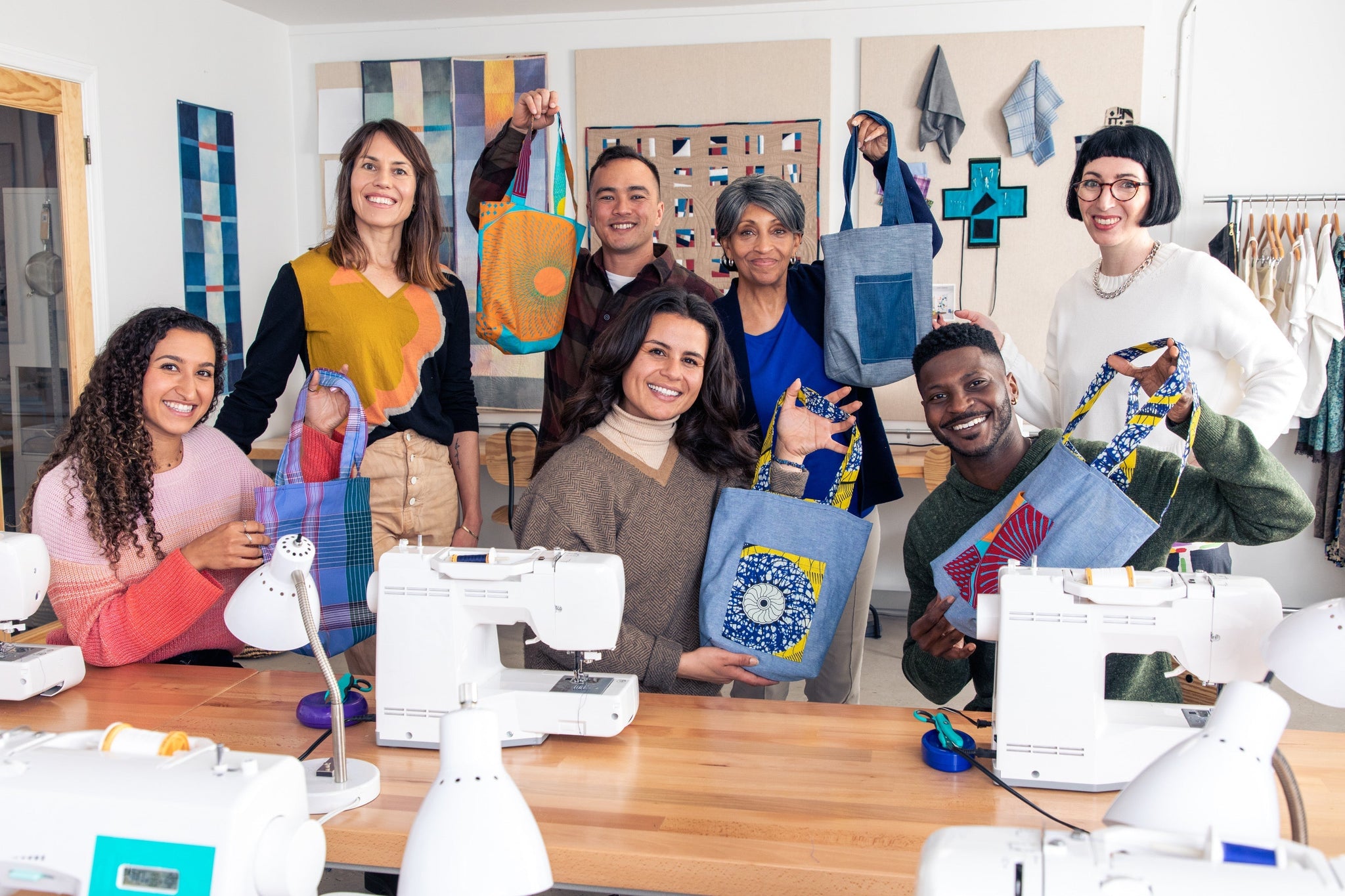
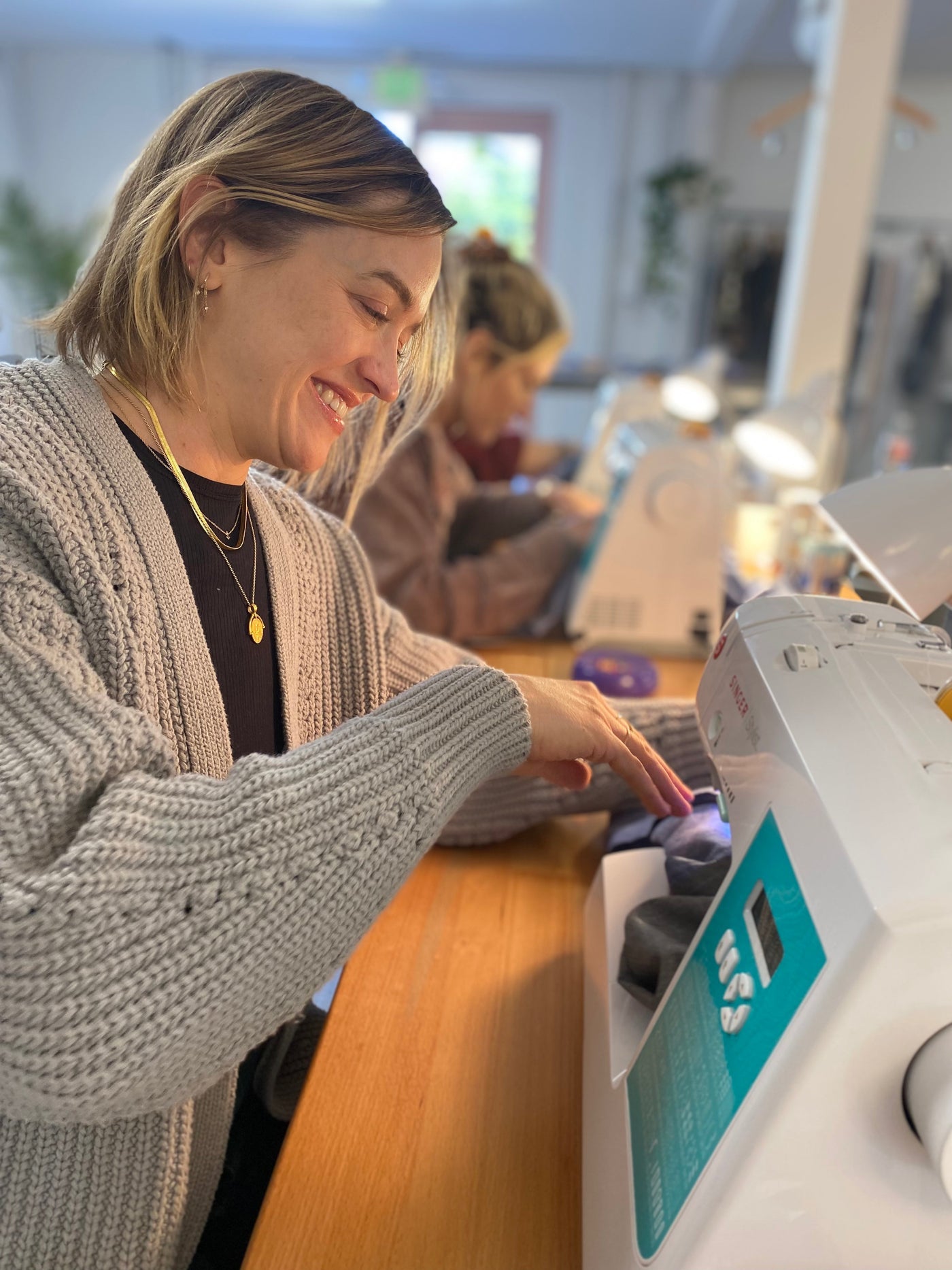
In a beginner sewing class you are not expected to know anything when you arrive. You learn in a small group, on real machines, with an instructor whose job is to get you from nervous to capable in a controlled way.
You can still watch videos at home, but the sewing class gives you the foundation that makes everything else easier to understand.
What You Learn In Your First Sewing Class
A good sewing class does not throw you straight into a complex dress pattern. It builds from the absolute basics and layers skills session by session.
1. Getting To Know The Sewing Machine
Your sewing machine is a tool, not a mystery box. In a beginner sewing class you will:
- Learn the names of the main parts of the machine
- Thread the top thread and wind and insert the bobbin
- Understand basic tension settings
- Learn how to change needles and presser feet
By the end of the first lesson you should be able to set up your machine on your own without guessing. If you want to go deeper with the technical side, you can always move on to a more focused session like the private sewing workshop.
2. Practising Control And Straight Lines
Before you sew any garment, you need control.
You will usually start with practice sheets or scrap fabric and learn to:
- Sew straight lines and corners
- Pivot at the needle
- Control speed with the foot pedal
- Backstitch to secure a seam
This might feel slow, but it is the difference between messy, twisted seams and something that looks clean and finished.
3. Reading A Simple Pattern
Your first sewing class will not make you a pattern expert, but you will start to understand:
- Pattern pieces and cutting layouts
- Grainline and why fabric direction matters
- Simple markings like notches and fold lines
The aim is not to overwhelm you. The aim is to make sure that when you look at a beginner pattern at home, it is not a foreign language. If you fall in love with this part, you can later join more focused classes such as the shirt pattern and sewing instruction workshop or the dress workshop to build advanced pattern and garment skills.

The First Project: A Garment You Can Actually Wear
The point of a beginner sewing class is to help you complete one simple, wearable project from start to finish.
Typical first garment projects include:
- A basic elastic waist skirt
- Simple pajama shorts
- A loose top or simple tunic
These projects are chosen because:
- Fit is forgiving
- Construction uses mostly straight seams
- You get to learn key skills like hemming and inserting elastic
By the end of the course you should have at least one garment you are happy to wear. That is a big psychological win. It proves that the sewing class is not just theory. You have something solid to show for the time and money you invested.
If your goal is to improve the fit of pieces you already own, you can also look at the alterations workshop and learn how to tweak hems, seams and details.
What To Expect In Your First Beginner Sewing Class
Walking into a new studio can feel intimidating. Here is what a typical first sewing class looks like.
-
Short welcome and overview
You meet the teacher, get a rundown of the course and see example projects. -
Machine setup and safety
You learn the basic rules that keep your fingers safe and your machine happy. -
Guided practice
Everyone threads their machines and practices stitches together with the teacher walking around and correcting as needed. -
Start of the project
Depending on the length of the sewing class, you may start cutting your first project in lesson one or two.
You should never feel rushed or made to feel stupid for asking questions. A good sewing class moves at a beginner pace even if some students pick things up faster than others.
Who This Beginner Sewing Class Is Perfect For
A beginner sewing class is ideal if:
- You have a machine still sitting in its box
- You tried sewing once, got jammed threads, and gave up
- You want to make your own clothes instead of buying fast fashion
- You already do quilting or crafting and want to move into garments
You do not need any art or design background. You do not need to be “creative” in a big dramatic way. You only need basic patience and the willingness to show up for each sewing class and practice what you learn.
If you want to share the experience with someone, you can book a parent and child intro to sewing workshop or a private sewing workshop designed around your schedule.
How To Choose The Right Sewing Class At Moving Thread
Not all classes are equal. Before you book, check:
-
Class size
Small classes mean more attention. Huge groups are not great for nervous beginners. -
Clear project outcome
The sewing class should state exactly what you will finish by the end of the course. -
Level of support
Check how much guidance you receive and what the pace of the class is. -
Studio vibe
You want a place that feels welcoming and relaxed, not intimidating or competitive.
At Moving Thread, you can browse all workshops, read more about the featured instructors, and check the FAQ for details on what to bring, rescheduling policies and more.
How To Prepare For Your First Sewing Class
Preparation is simple, and you do not need to buy the entire fabric store.
- Bring your sewing machine if you own one, or confirm that studio machines are available
- Make sure you have basic tools like pins, fabric scissors and a tape measure, unless the class provides them
- Wear comfortable clothes, you will be sitting and moving around tables
- Arrive a little early so there is time to settle in and set up your machine
Most of the thinking has already been done for you. The intro to sewing 4 week workshop is designed to move you from zero to first wearable garment in a clear, structured way.
Where To Go Next After Your First Sewing Class
Once you have finished your first project, you can grow your skills in a few different directions:
- Fit and design: Join the shirt pattern and sewing instruction workshop or the dress workshop to work on fit, shaping and more advanced construction.
- Unique garments: Explore the kimono workshop if you want a statement piece that teaches new techniques.
- Skills for kids: Get younger makers started with kids sewing workshops that focus on fun and confidence.
- Gifting the skill: If there is someone you know who has always wanted to sew, consider a gift that lasts a lifetime in the form of a workshop gift card.
Ready To Start Your First Sewing Class?
If you are tired of feeling scared of your sewing machine or frustrated with half finished projects, a beginner sewing class at Moving Thread is the fastest way to fix that.
In just a few sessions you can learn to set up your machine, sew straight seams, read a simple pattern and finish a garment you are proud to wear.
Browse all current workshops, pick the session that fits your schedule, and book your spot. The next time someone asks where you got your skirt or shorts, you get to say, “I made it.”