Shirt Patterns: A Beginner’s Guide to Styles, Shapes and Creative Possibilities

Shirt patterns can look surprisingly simple when you first unfold them. A front. A back. Maybe a sleeve. A collar. A few mysterious markings. Yet those pieces can become everything from a crisp button-up shirt to a relaxed linen top, an oversized layer or a soft sleeveless blouse.
That is part of the magic of sewing clothes from patterns. The pattern gives you the structure, but fabric, fit, length, sleeves, collars and small design decisions can completely change the finished garment.
For beginner sewists, exploring different types of shirt patterns is also a wonderful way to understand how clothing is constructed. You begin to notice where seams sit, why certain shapes create volume, how sleeves connect to a bodice and what makes one shirt feel tailored while another feels loose and effortless.
At Moving Thread LA, learning to work with garment patterns is part of the journey from basic machine sewing toward making clothing that feels personal, intentional and genuinely wearable.
Why Shirt Patterns Are So Interesting
A shirt seems like one of the most familiar pieces of clothing in the world. Most of us wear some version of one constantly. But start looking closely and you discover how many different decisions go into its shape.
Is it fitted or oversized? Does it button down the front? Is there a collar? Are the sleeves set into an armhole or cut as part of the body? Does the hem finish at the waist, hips or below? Is there a yoke across the back? Are there darts shaping the garment around the body?
Every one of those decisions changes the shirt pattern.
That makes shirts especially useful for learning garment sewing. Once you begin recognizing the basic shapes behind different shirt patterns, clothes stop looking like mysterious finished objects. You start seeing how they were built.
What Is A Shirt Pattern?
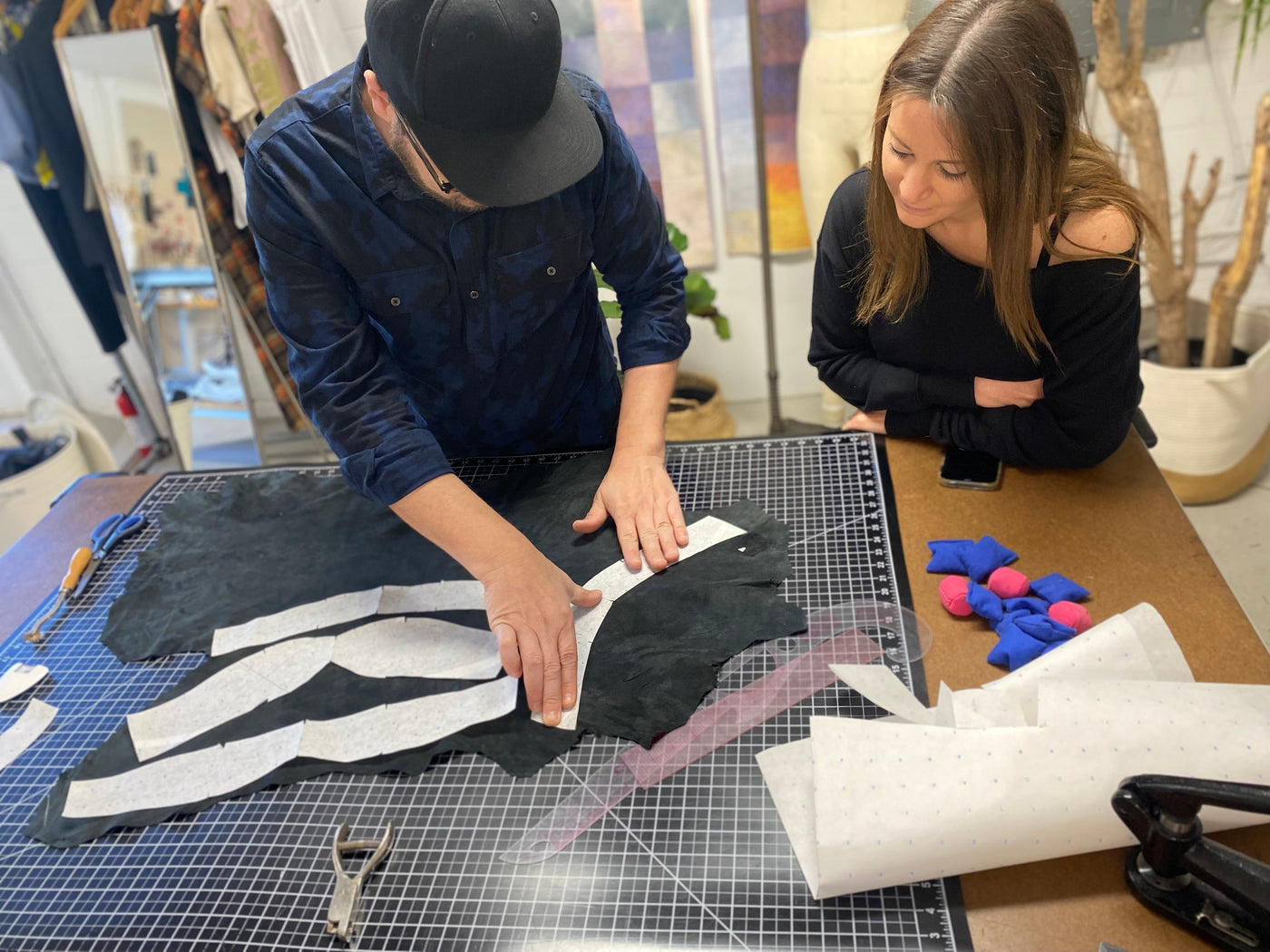
A sewing pattern is essentially a set of templates and instructions used to cut fabric into the shapes required to construct a garment.
Depending on the design, shirt patterns may include pieces for:
- Front bodice sections
- Back bodice sections
- Sleeves
- Collars and collar stands
- Cuffs
- Front plackets or facings
- Pockets
- Back yokes
- Neckline facings
The pattern pieces also contain useful information. Grainlines show how pieces should be positioned on the fabric. Notches help different sections line up. Cutting lines determine the garment size and shape. Other markings may indicate buttons, buttonholes, folds, darts or areas that need gathering.
Learning to understand these markings is one of the first major steps between simply operating a sewing machine and actually constructing clothing from a pattern.

The Classic Button-Up Shirt Pattern
The classic button-up is probably what most people imagine when they think about shirt patterns.
It normally has separate front and back pieces, sleeves, a collar and a button opening down the front. More detailed versions may include cuffs, a collar stand, pockets and a back yoke.
This type of shirt can feel wonderfully polished because there are so many small construction details working together. It also teaches valuable sewing techniques.
You may learn how to create buttonholes, attach buttons, sew a collar, manage interfacing, finish seams and produce neat topstitching.
For a complete beginner, a classic shirt may contain more steps than you want in your very first project. But once you are comfortable using a sewing machine, it can be an exciting way to move into more serious garment construction.
Boxy Shirt Patterns
Boxy shirt patterns are wonderful for beginners because the silhouette is deliberately loose and geometric.
Instead of closely following the shape of the body, a boxy shirt usually falls more freely from the shoulders or bust. The body may be almost rectangular, giving the finished garment a relaxed, modern shape.
This simplicity can reduce some of the fitting challenges that come with more tailored clothing.
A boxy shirt can still have plenty of personality. Change the fabric and the entire garment changes. Crisp cotton can make the shape feel graphic and structured. Linen creates something softer and more relaxed. A bold print can turn a simple pattern into the main feature of an outfit.
It is a good example of how a relatively uncomplicated shirt pattern can become visually interesting through fabric choice.
Oversized Shirt Patterns
Oversized shirts take extra volume and make it part of the design.
These shirt patterns may use wider bodies, dropped shoulders, longer hems and roomier sleeves. The finished shirt can be worn buttoned, open over another garment, tucked into pants or layered almost like a lightweight jacket.
There is an important difference between intentionally oversized and simply sewing a normal fitted pattern several sizes too large.
A pattern designed to be oversized considers proportion throughout the garment. The shoulders, sleeves, neckline and body are designed to work together at that larger scale.
This is a useful lesson for beginners: size and design ease are not the same thing. A larger size is meant for a larger body measurement. An oversized design deliberately includes additional room as part of its style.
Sleeveless Shirt Patterns
Removing the sleeves might sound like it would make a shirt incredibly simple. Sometimes it does. But sleeveless shirt patterns have their own details to consider.
Without sleeves, the armholes become visible finished edges. They may be completed using bias binding, facings or another clean finishing technique.
Sleeveless patterns are useful for learning because they allow you to focus on the body of a garment without also constructing and inserting sleeves.
Depending on the neckline and closure, a sleeveless shirt can become a simple shell top, button-front blouse, summer shirt or layering piece.
They are also a great reminder that fewer pattern pieces do not necessarily mean fewer design possibilities.
Camp Collar Shirt Patterns
Camp collar shirts have a wonderfully relaxed personality.
The collar lies open around the neckline rather than closing tightly around the neck like a traditional collared shirt. This creates the casual shape associated with many summer shirts, bowling shirts and vacation-inspired designs.
Camp collar shirt patterns often work beautifully with expressive fabrics because the silhouette itself is relatively easygoing.
A plain linen can make the shirt feel minimal. A colorful print creates something playful. Stripes can make it feel classic. One pattern can travel in completely different creative directions depending on the fabric you choose.

Popovers And Pullover Shirt Patterns
Not every shirt needs buttons running all the way down the front.
Popover and pullover shirt patterns are designed to go over the head. Some have no front opening at all, while others include a short partial placket at the neckline.
These styles can sit somewhere between a shirt and a simple top.
They are particularly interesting for beginners because removing a full front button closure can simplify the construction while still allowing you to learn about necklines, sleeves, hems and garment shape.
Once you understand a simple pullover, you can begin to see how additional details such as plackets, collars and buttons build complexity onto the same basic idea.
Different Shirt Patterns And What They Teach
Different shirt patterns introduce different sewing skills. There is no single perfect first shirt for everyone.
| Shirt Pattern | What Makes It Interesting | Skills It Can Help Build |
|---|---|---|
| Boxy shirt | Relaxed shape with fewer fitting challenges | Basic construction, hems and seam finishing |
| Classic button-up | Structured and full of traditional shirt details | Collars, buttonholes, plackets and topstitching |
| Oversized shirt | Uses volume and proportion as part of the design | Pattern reading, garment proportions and finishing |
| Sleeveless shirt | Removes sleeve construction while keeping a wearable shape | Armhole finishing, facings and bias binding |
| Camp collar shirt | Relaxed open collar with lots of fabric possibilities | Collar construction, button fronts and matching prints |
| Popover shirt | Simple shirt shape without a complete button opening | Neckline construction, plackets and basic garment assembly |
Why Sleeves Can Completely Change A Shirt Pattern
Sleeves deserve more attention than they usually receive.
Take the same basic shirt body and change the sleeve, and suddenly you have a completely different garment.
Short sleeves can feel casual and simple. Long sleeves with cuffs make a shirt feel more structured. Wide sleeves create drama. Gathered sleeves introduce softness and volume. Dropped shoulders make the entire shirt feel relaxed.
Set-in sleeves are sewn into a shaped armhole and are common in more traditional shirts. Kimono-style or grown-on sleeves may be incorporated into the body pattern instead, creating fewer seams and a looser silhouette.
As you explore shirt patterns, look beyond the body shape. The sleeve can tell you just as much about the character of the finished garment.
How Collars Change The Personality Of A Shirt
Collars are small pieces with enormous visual influence.
A pointed shirt collar can feel classic. A camp collar feels relaxed. A rounded collar can feel playful or vintage-inspired. A simple band collar removes the traditional collar points altogether and creates a cleaner neckline.
You can also choose shirt patterns with no collar at all.
For beginners, collars are useful because they teach precision. Small changes become visible quickly. Curves need to be smooth. Corners need to turn cleanly. Layers of fabric and interfacing need to sit correctly.
They can feel fiddly at first, but that challenge is part of what makes completing your first proper collar so satisfying.
How Fabric Changes The Same Shirt Pattern
One of the most exciting things about shirt patterns is that the paper pattern is only half of the design.
The fabric completes it.
A crisp woven cotton holds shape and can make collars, plackets and seams feel defined. Linen can create a more relaxed appearance. A softer woven fabric may produce more movement and drape.
Print matters too.
A simple shirt made in white feels entirely different from the same shirt made in stripes, checks, florals or an oversized abstract print.
This is why shirt-making can become addictive. Once you find a pattern you enjoy, you do not necessarily need a completely new pattern every time. You can make another version in a different fabric and discover a completely different garment.
What Makes A Shirt Pattern Beginner-Friendly?
If you are learning to sew, the most impressive shirt pattern is not necessarily the best one to begin with.
Look for a pattern that lets you practice a manageable number of new skills at once.
Beginner-friendly features can include:
- A relaxed rather than closely fitted shape
- A relatively small number of pattern pieces
- Clear pattern markings and instructions
- Simple sleeves or no sleeves
- A straightforward neckline
- Limited complicated closures
- Fabric that is stable and easy to handle
This does not mean you have to avoid interesting details forever. It simply means that learning becomes much more enjoyable when each project adds one or two challenges instead of twelve.
How To Read Shirt Patterns Without Feeling Overwhelmed
The first time you open a sewing pattern, it can feel as though somebody handed you a map written in another language.
There may be multiple sizes printed on top of one another, arrows, circles, triangles, dotted lines and unfamiliar sewing terms.
You do not need to understand everything instantly.
Start with the pattern pieces you need for the version you are making. Find your size. Identify the cutting line. Locate the grainline. Look for notches. Read through the construction steps before cutting anything.
Slowly, the pattern begins to make sense.
This is one reason learning from a real garment pattern can be so valuable. You are not only making one shirt. You are learning a visual language that will appear again in dresses, pants, jackets and almost every other garment you may want to sew.
From Simple Shirt Patterns To More Advanced Sewing
Once you understand a basic shirt, you can start adding complexity.
You might begin with a loose pullover top. Then try a shirt with sleeves. Next comes a button front. Then perhaps a collar, cuffs, pockets or a yoke.
Each new shirt pattern becomes a way to practice something you already know while adding one new technique.
Eventually, you may also begin changing patterns instead of simply following them. You can alter the length, reshape a sleeve, move a pocket, change the hem or experiment with proportions.
That is where working from patterns becomes especially creative. The pattern stops feeling like a strict set of rules and starts becoming a foundation you understand well enough to play with.

Learning To Sew A Classic Shirt At Moving Thread LA
If you have already learnt the fundamentals of using a sewing machine and want to understand garment patterns more deeply, a structured shirt project can be a natural next step.
Moving Thread LA’s Classic Shirt: Pattern and Sewing Instruction workshop is designed for advanced beginners who want to learn how to work from a pattern and construct a shirt from beginning to end.
The workshop covers tracing a size from a master pattern, making length adjustments, cutting fabric along the correct grainlines, working with interfacing, assembling the garment, finishing seams and completing details such as topstitching, hems, buttonholes and buttons.
It is the kind of project that connects many individual sewing skills into one finished garment.
If you are completely new to machine sewing, beginning with Moving Thread LA’s Intro to Sewing class can help you build the basic machine confidence needed before moving into more detailed garment patterns.
Which Shirt Pattern Should You Try First?
The best shirt pattern is the one that gives you enough challenge to learn without making the project feel impossible.
If you are still developing confidence, choose a simple boxy or pullover shape. If you are comfortable sewing seams and handling a machine, try sleeves or a simple closure. If you are ready for more precision, move toward collars, button plackets and cuffs.
You can think about it like this:
- Choose a boxy shirt if you want a simple, relaxed first garment.
- Choose a sleeveless pattern if you want to practice garment construction without inserting sleeves.
- Choose a popover if you want to explore shirt construction without a complete button front.
- Choose a camp collar shirt if you love relaxed shapes and interesting fabrics.
- Choose an oversized shirt if you want to explore proportion and layering.
- Choose a classic button-up when you are ready to practice collars, plackets, buttonholes and detailed finishing.
There is no need to rush toward the most complicated option. Sewing skills build beautifully when one project prepares you for the next.
Ready To Explore Shirt Patterns?
Shirt patterns are much more than pieces of paper telling you where to cut. They are the architecture behind clothes.
A simple change in sleeve, collar, length, fit or fabric can transform the same basic idea into something completely different. That is what makes shirt-making such an interesting part of learning to sew.
Start with a shape you genuinely want to wear. Learn what each pattern piece does. Take your time with the construction. Then make another version and change something.
If you already know the basics and want hands-on guidance through the process of working from a garment pattern, explore Moving Thread LA’s shirt-making workshop:
Classic Shirt: Pattern and Sewing Instruction
Or, if you are at the very beginning of your sewing journey, start with:
Once you understand how a shirt pattern becomes a real garment, opening the next pattern envelope feels a little less mysterious and a lot more exciting.