Clothing Alterations: Creative Ways to Transform the Clothes You Already Own

Clothing alterations can completely change the way you see the clothes already hanging in your wardrobe.
A dress that feels too long can become playful and modern. An oversized shirt can become fitted, cropped or reshaped. A pair of pants that almost works can suddenly become a favorite after the rightadjustment. Even something as small as changing buttons, adding a pocket or altering a sleeve can give a garment an entirely different personality.
For anyone interested in fashion design, clothing alterations are especially exciting because they teach you to look beyond the finished garment. Instead of seeing clothing as something fixed, you begin to see seams, proportions, shapes, details and possibilities.
At Moving Thread LA, learning to alter clothing becomes a hands-on way to explore fashion, develop practical sewing skills and discover how small design decisions can transform what you wear.
Why Clothing Alterations Are So Creative
People often think of clothing alterations as purely practical. Pants are too long, so they need hemming. A waist is too loose, so it needs taking in. A strap keeps falling down, so it needs shortening.
But alterations can go much further than correcting fit.
Every alteration is also a design decision.
Change the length of a skirt and the proportion of the entire outfit changes. Remove a sleeve and a structured blouse can suddenly feel relaxed. Add contrast stitching and an invisible repair becomes a decorative detail. Crop a jacket and the silhouette becomes completely different.
That is what makes clothing alterations so interesting for fashion design enthusiasts. You are working with an existing garment, but you are still making choices about shape, balance, function, color and style.
In many ways, altering clothes is like having a conversation with the original designer. You look at what already exists and decide what should stay, what should change and what the garment could become next.

Start By Looking At Clothes Differently
Before changing anything, look carefully at the garment.
Do not immediately ask, “How do I fix this?”
Ask, “What is bothering me about it?”
Maybe the garment technically fits, but the proportions feel wrong. Perhaps the sleeves are overwhelming. The neckline may feel too high. The skirt might hit at an awkward point. A shirt may have beautiful fabric but an outdated shape.
Understanding the problem is one of the most important parts of clothing alterations.
Try putting the garment on and looking at it from several angles. Fold the hem upward temporarily. Pin excess fabric at the sides. Roll the sleeves. Tuck part of the garment under. Add a belt. Try different shoes.
These small experiments let you explore a new silhouette before cutting anything.
For someone interested in fashion design, this is valuable practice. You begin learning how proportion changes the way a garment feels on the body.
Creative Clothing Alterations To Try
There are endless ways to transform clothing, but some alterations are particularly useful for developing your design eye.
- Crop an oversized shirt, sweatshirt or jacket.
- Shorten a long dress into a mini or midi length.
- Turn long sleeves into short sleeves.
- Reshape an oversized garment through the side seams.
- Add patch pockets in a contrasting fabric.
- Replace ordinary buttons with something more expressive.
- Add decorative topstitching around seams or pockets.
- Change straps on a dress or camisole.
- Add a side slit to change movement and shape.
- Turn jeans into shorts.
- Add fabric panels to create extra width or visual contrast.
- Use visible mending as part of the design.
- Add trim, ribbon or binding around an edge.
- Combine sections from two garments into one new piece.
- Transform an old shirt into a completely different wearable item.
The best clothing alterations are not necessarily the most complicated. A small change in exactly the right place can have more impact than rebuilding an entire garment.
How Does Changing Length Transform A Garment?
Length is one of the easiest places to experiment with clothing alterations because it has such a strong effect on proportion.
Imagine the same dress at three different lengths.
At ankle length it may feel dramatic and flowing. At mid-calf it can feel relaxed or vintage-inspired. Above the knee it may suddenly look playful and contemporary.
The basic garment has not changed very much, but the visual effect has.
The same principle applies to sleeves, shirts, jackets and pants.
An oversized button-down can become a cropped shirt. Full-length jeans can become ankle-length pants. Long sleeves can become elbow-length sleeves. A jacket that overwhelms your frame may feel completely different when shortened.
These kinds of clothing alterations teach an important fashion design lesson: proportion matters just as much as decoration.
How Can You Change The Shape Of Clothes?
Changing shape takes clothing alterations from simple adjustments into something closer to garment design.
Taking in side seams can turn a loose garment into a more fitted silhouette. Removing width from sleeves can make a shirt feel sharper. Adding fabric panels can create volume rather than remove it.
You can also experiment with gathers, darts, elastic and ties.
An oversized shirt could be gathered at the waist. A straight dress could gain shape through darts. A loose top could become adjustable with ties. A wide garment could be drawn inward with elastic.
Each technique changes the relationship between the fabric and the body.
This is where clothing alterations become particularly useful for aspiring designers. You begin to understand that garments are essentially shapes constructed from fabric. Once you understand where those shapes come together, you can begin changing them intentionally.
Clothing Alterations And What They Teach You
Different alterations develop different sewing and fashion design skills.
| Clothing Alteration | What Changes | What It Helps Teach |
|---|---|---|
| Hemming | Changes the length of pants, dresses or skirts | Measuring, pressing, stitching and proportion |
| Taking in side seams | Creates a closer-fitting silhouette | Fit, seam construction and garment shape |
| Cropping | Changes the overall proportion of a garment | Design decisions, balance and finishing |
| Changing sleeves | Alters volume, length or style | Garment construction and proportion |
| Adding pockets | Adds function and visual interest | Placement, construction and detail design |
| Visible mending | Turns repairs into decorative features | Creative problem-solving and stitching |
| Replacing buttons | Changes a small but noticeable detail | Styling, finishing and attention to detail |
| Adding fabric panels | Adds width, contrast or movement | Fabric combinations and garment structure |

The Creative Power Of A Simple Hem
Hemming might sound like one of the least exciting clothing alterations, but it can completely change a garment.
Hemlines determine where the eye stops. That makes them an important part of proportion.
Imagine a pair of wide-leg pants dragging on the floor. Shorten them to sit correctly above your shoes and suddenly the entire silhouette looks more intentional.
A dress can change just as dramatically. Before cutting, experiment by folding and pinning the hem at several different lengths. Step away from the mirror and compare each option.
This is design thinking in a very practical form.
You are not simply shortening fabric. You are deciding where the garment should end and how that decision changes the overall look.
Visible Mending Can Become Part Of The Design
Not every repair needs to disappear.
Traditional clothing alterations often try to make repairs as invisible as possible. The goal is to restore the garment without anyone noticing what happened.
But visible mending takes the opposite approach.
A tear can become an opportunity for contrast stitching. A worn section of fabric can gain a deliberately visible patch. Repeated stitches can create texture and pattern.
Instead of hiding the history of the garment, the repair becomes another chapter in it.
This approach can be especially interesting for denim, jackets, casual shirts and pieces that already have character.
For fashion design enthusiasts, visible mending is also a reminder that limitations can inspire creativity. A damaged area gives you a problem to solve, and the solution does not always need to imitate the original design.
Can An Oversized Garment Become Something Completely Different?
Oversized clothing offers some of the most exciting opportunities for creative clothing alterations because there is already extra fabric to work with.
An oversized men's shirt, for example, can become much more than a smaller shirt.
You might crop it, reshape the sides, shorten the sleeves or add ties at the waist. You could remove the sleeves entirely or use excess fabric to create another detail.
An oversized dress can be gathered, belted, shortened or reshaped. Wide pants can become shorts. A large sweatshirt can become a cropped layer.
The key is to stop thinking only about making the garment smaller.
Instead ask:
- What parts of this garment do I like?
- What parts feel wrong?
- Is there interesting fabric I want to preserve?
- Could the silhouette become something completely different?
- Can existing details such as pockets or buttons become part of the new design?
That shift turns clothing alterations into creative redesign.
Why Fit Is Such An Important Part Of Fashion Design
Fashion illustrations often begin with dramatic ideas: color, shape, texture, volume and silhouette.
But eventually every garment has to interact with a real body.
That is where fit becomes important.
Working on clothing alterations teaches you to notice where fabric pulls, hangs, twists, bunches or falls correctly. You begin seeing how shoulder placement affects sleeves, how waist position changes proportion and how apparently small differences in length can change the whole look.
This kind of observation develops slowly.
The more garments you alter, make and study, the better you become at recognizing why something works.
That knowledge is valuable whether your goal is to alter your own wardrobe, make clothing from patterns or eventually design garments yourself.
When Should You Alter And When Should You Redesign?
Sometimes a garment only needs one practical correction. Other times it is more interesting to rethink the garment entirely.
If the pants fit perfectly except for the length, hemming is probably enough.
If you love a dress but dislike its sleeves, changing the sleeves might solve everything.
But if you like the fabric and almost nothing else about the piece, a more creative redesign may make sense.
A useful way to approach clothing alterations is to begin with the smallest change that could make the garment wearable.
Try pinning it first. Fold the hem. Remove a belt. Add a belt. Roll the sleeves. Temporarily pin the side seams.
If one small adjustment solves the problem, you have your answer.
If it still feels wrong, keep exploring.
Why Clothing Alterations Are Great Fashion Design Practice
You do not need to create an entire garment from a blank piece of fabric to practice fashion design.
Altering existing clothing teaches many of the same ways of thinking.
You make decisions about silhouette. You evaluate proportion. You work with fabric limitations. You consider construction. You decide which details matter. You solve unexpected problems as they appear.
Perhaps most importantly, you learn by physically working with clothing.
A sketch can show how you imagine a sleeve should fall. Clothing alterations show you what actually happens when fabric, seams, gravity and the body meet.
That experience can make your future design ideas much stronger.
How To Start Learning Clothing Alterations
If you already know the basics of using a sewing machine, begin with garments that have relatively simple problems.
Choose clothing that you like but do not currently wear.
Look for pieces that need:
- A shorter hem
- A simple seam repair
- A small fit adjustment
- Shorter sleeves
- A replacement button
- A patch
- A decorative detail
- A simple creative refresh
Avoid making your first project something extremely valuable or technically complicated. Clothing alterations become easier as you understand more about garment construction, and every simple project prepares you for something more ambitious.
If you are completely new to machine sewing, it can help to learn the fundamentals before cutting into clothes you care about.
Moving Thread LA’s Intro to Sewing Class for Beginners introduces the sewing machine, threading, basic stitches and foundational sewing techniques through a beginner project.
Learn Clothing Alterations With Garments You Already Own
Once you have basic machine sewing skills, working with your own wardrobe can make learning feel much more relevant.
Instead of practicing every technique on anonymous pieces of fabric, you can solve real problems.
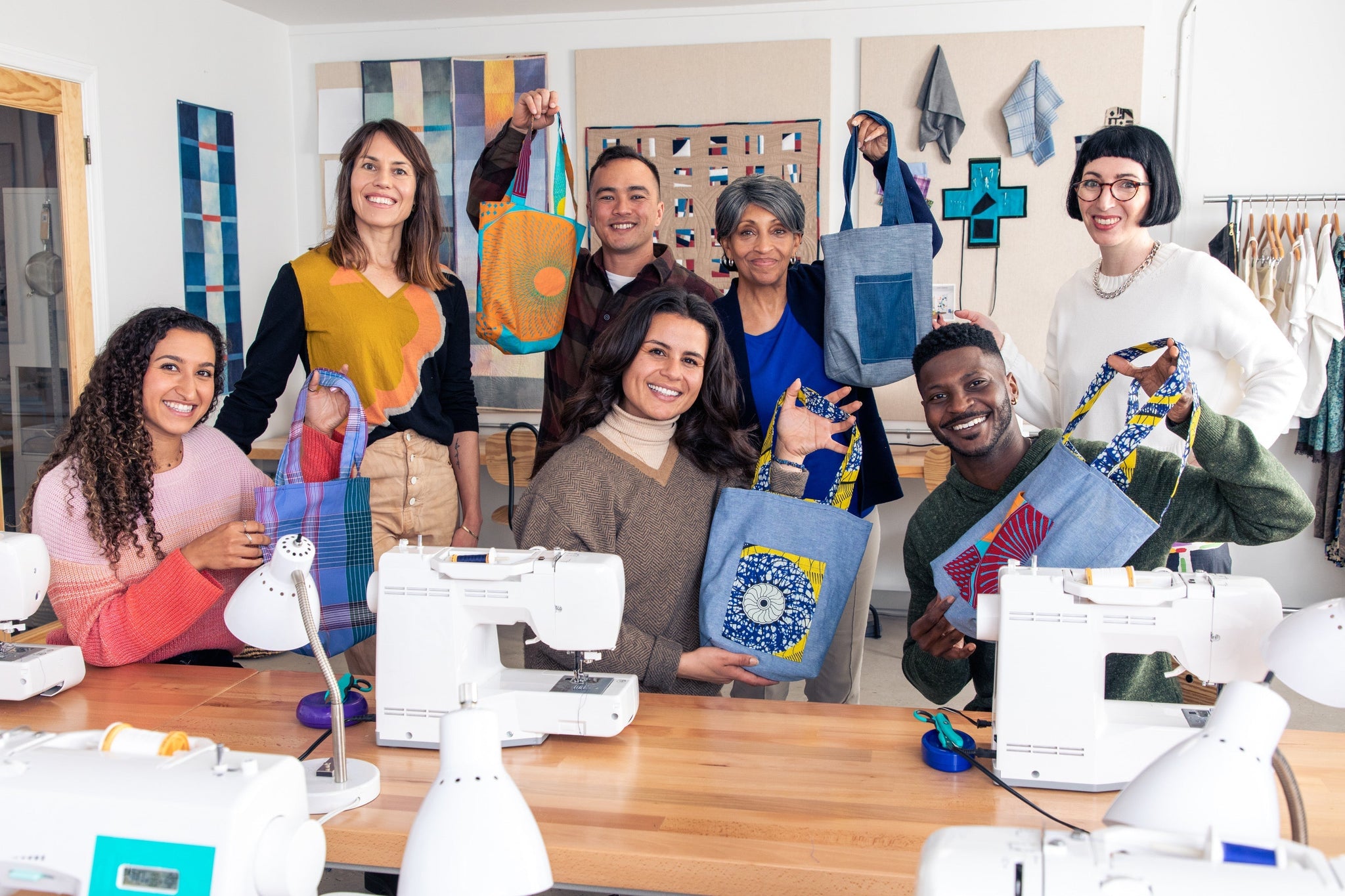
That is the idea behind Moving Thread LA’s Alterations Workshop. Students bring clothing that needs alterations or repairs and explore ways to modify, mend and refresh those garments with guidance.
The workshop is especially interesting for fashion design enthusiasts because every garment brings a different problem.
One person may be changing a hem. Another may be adjusting fit. Someone else may be trying to rethink a garment completely.
There is no single alteration that works for every piece, and that is exactly what makes the process creative.

Ready To Look At Your Wardrobe Differently?
Clothing alterations can begin with something tiny.
A hem. A seam. A button. A sleeve.
But once you start understanding how garments are constructed, it becomes difficult to look at clothing in quite the same way again.
An awkward dress becomes a design problem. An oversized shirt becomes potential fabric. A torn jacket becomes an opportunity for a visible repair. Something you stopped wearing can become the starting point for your next creative project.
For fashion design enthusiasts, that is perhaps the most exciting part of clothing alterations. You are not limited to accepting a garment exactly as it was made.
You can study it. Question it. Change it. And eventually make it feel more like your own.
If you already have basic sewing-machine skills and a few pieces in your closet that are waiting for the right idea, explore Moving Thread LA’s Alterations Workshop and bring those garments back to the sewing table.
Sometimes the most interesting fashion project is already hanging in your closet.