Sewing classes are the quickest way to go from “I have a machine but no idea what I’m doing” to real confidence, real skills, and finished projects you actually want to use or wear. If you want to browse all current options first, start here: all classes and workshops.
Sewing classes: What to expect in your first session (so you feel ready)
Your first session is usually a mix of short demonstrations and hands-on practice. You will learn how the machine works, how to stitch cleanly, and how to avoid the beginner mistakes that cause most people to quit. Good sewing classes feel calm, structured, and beginner-friendly, not rushed or confusing.

What do sewing classes usually teach first?
Most beginner sewing classes start with the same foundations because they matter for everything that comes next:
- Threading the machine and winding a bobbin
- Basic stitch settings and when to use them
- Sewing straight lines and controlling speed
- Seam allowance and why accuracy matters
- Pressing as you sew (this is what makes work look clean)
If you want the most direct beginner starting point, book: Intro to Sewing.
Sewing classes: What should you bring?
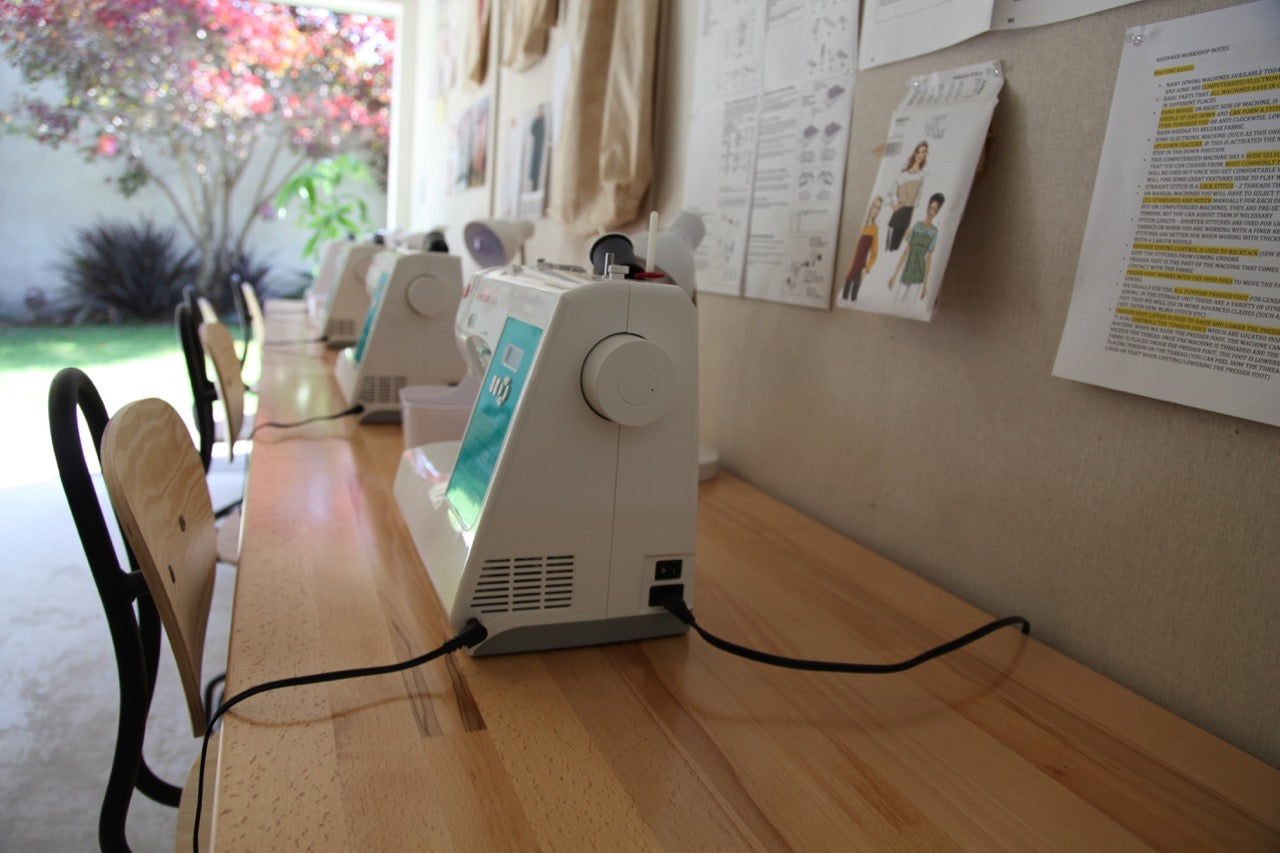
What you bring depends on the studio and the class type, but most beginner sewing classes keep it simple. If the class provides machines and materials, you mainly need to show up ready to learn. If you bring your own machine, bring the power cord, foot pedal, bobbins, and a universal needle pack.
For the exact logistics like materials, arrival time, and what is included, use: FAQ.

What you might make in beginner sewing classes
Beginner projects are designed to teach fundamentals while still being satisfying. Many sewing classes start with something small that builds control, then move into simple wearables. Typical beginner-friendly makes include:
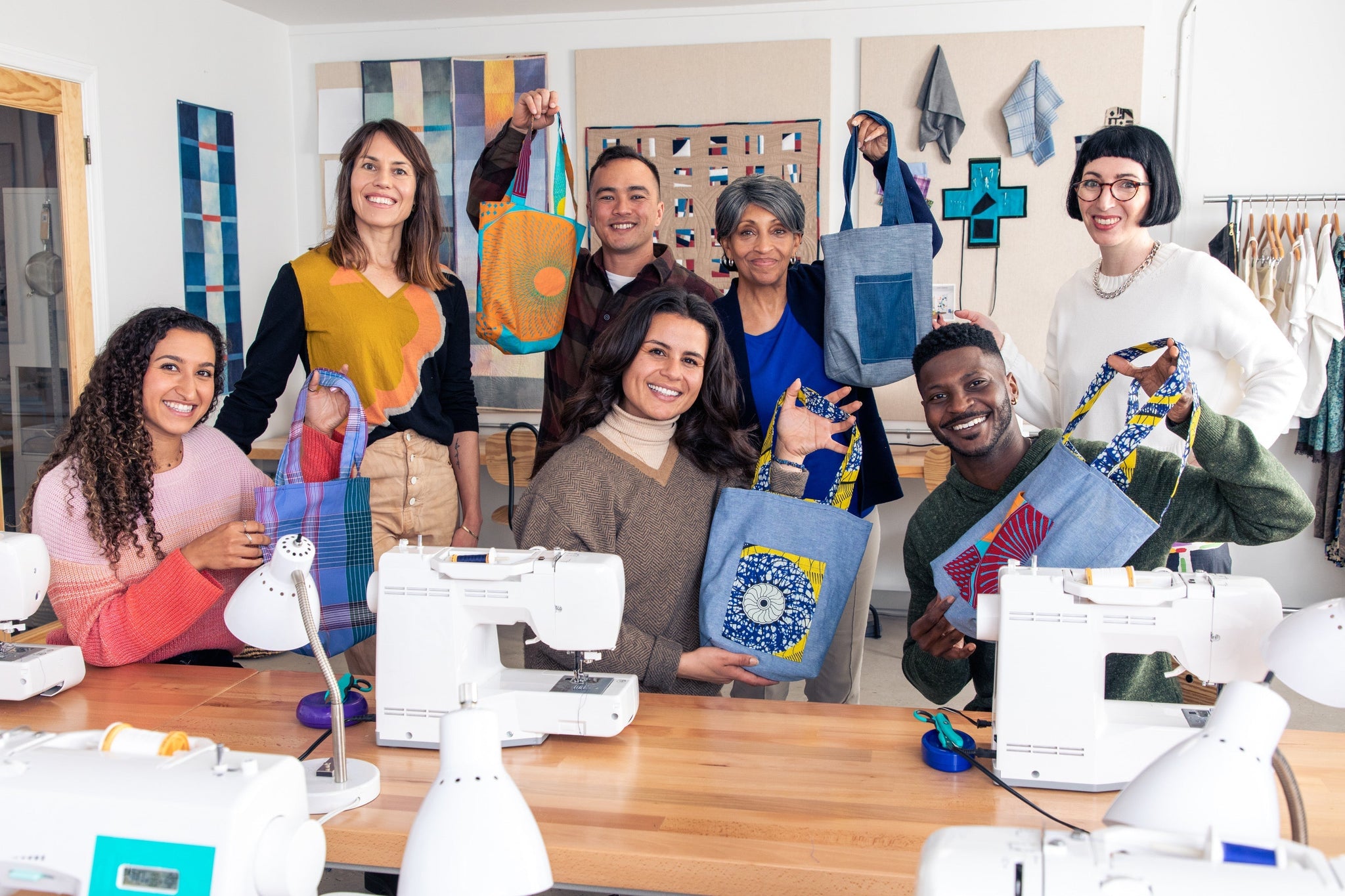
- Simple accessories like pouches or totes
- Easy elastic waist items
- Basic tops or layering pieces with forgiving fit
The point is to finish something and build skills you can repeat, not to tackle the hardest project on day one.
Sewing classes: Why a multi-week course can be a game-changer
One-time workshops are great for a fast confidence boost. Multi-week sewing classes are better if you want skills to stick, because you get repetition, troubleshooting time, and more opportunities to ask questions as you practice.
If you want that guided structure, use: Intro to Sewing 4 Week Workshop.

Common beginner problems sewing classes help you fix quickly
- Thread bunching underneath: usually incorrect threading or bobbin setup, easy to correct when someone can see it.
- Seams that wander: speed control and consistent guiding solves this fast.
- Fabric puckering: needle choice, tension, and pressing usually fix it.
- Cutting mistakes: you learn measuring and marking habits that prevent expensive errors.
This is why sewing classes are worth it: you stop guessing and start improving with feedback.
How sewing classes support creativity and a more sustainable wardrobe
Sewing teaches you how clothing is built, which changes how you shop. You start caring about fit and construction, you buy fewer throwaway pieces, and you repair or improve what you already own. That reduces reliance on fast fashion and helps you build a wardrobe that feels personal.
For context on the fast fashion problem, this overview is useful: Fast fashion.
How to choose the right sewing classes for your goals
Pick sewing classes based on your next realistic step. If you want basics, start with an intro. If you want to improve fit and fix clothing, do an alterations-focused option. If you want a specific garment style, choose a workshop that matches that goal.
If you want to learn from experienced teachers with different specialties, explore: Featured Instructors.