
Quilting is more than a sewing technique. It is memory, geometry, storytelling, color, patience and history stitched into layers of cloth.
A quilt can begin with scraps from old clothing, carefully chosen fabric squares, a bold modern palette or a box of unfinished blocks waiting for the right moment. It can be practical, decorative, deeply personal or wildly experimental. That is part of what makes quilting so fascinating. It belongs to the home, the studio, the museum and the imagination.
For beginners and experienced sewists alike, exploring quilting ideas can open up a new creative world. Patchwork teaches rhythm and composition. Curved quilting brings movement and play. Finishing techniques help turn loose blocks and unfinished pieces into something complete.
At Moving Thread LA, quilting workshops give students the chance to slow down, learn practical techniques and experience the magic of quilt-making in a hands-on studio setting.
Why Quilting Still Captures The Imagination
Quilting has lasted for centuries because it is both useful and expressive. At its simplest, a quilt is made from layers of fabric stitched together. But in practice, quilts have always carried more meaning than warmth alone.
They can mark a marriage, a birth, a friendship, a move, a season of grief or a fresh start. They can preserve fabric from clothing that once belonged to someone important. They can show the maker’s eye for balance, contrast and surprise. They can also reveal the time, place and culture in which they were made.
That is why quilting ideas are so rich. You can look at a quilt and ask: Why these colors? Why this pattern? Why this fabric? Was the maker following tradition, using what was available, or inventing something completely new?
A Short History Of Quilting
The history of quilting stretches back far beyond the modern sewing room. Quilted textiles were used in different parts of the world for warmth, clothing, protection and decoration. In Europe, quilting can be traced at least to medieval times, and the word “quilt” is linked to the Latin word “culcita,” meaning a cushion, mattress or padded cover.
Over time, quilting and patchwork developed in many directions. Quilting refers to stitching layers together, while patchwork refers to joining smaller pieces of fabric to create a larger design. The two are often combined, but they are not exactly the same thing.
In early America, whole-cloth quilts were popular in the eighteenth century. These were often made from a single large fabric on the top, a backing layer and batting in between. The beauty came from the stitched quilting designs rather than from pieced blocks. Some were made from wool and designed for warmth in cold homes.
By the nineteenth century, printed cottons and calicos became more widely available. This helped pieced quilts grow in popularity. Small fabric pieces could be arranged into stars, diamonds, strips, blocks and repeating patterns. Quilt-making became a way to combine practicality with artistry.
Some quilts were made for everyday use. Others were made to commemorate important relationships or events. Album quilts, presentation quilts and signature quilts carried names, messages and memories. They were not only bedcovers. They were social documents.

The Most Interesting Parts Of Quilt History
One of the most fascinating things about quilting history is how often quilts were made from what people had, not what they wished they had. Scraps, worn clothing, feed sacks, leftover dress fabric and household textiles could all become part of a new design.
That resourcefulness is part of quilting’s beauty.
A powerful example is the quilting tradition of Gee’s Bend, Alabama. The women of Gee’s Bend developed a remarkable quilt-making tradition rooted in necessity, community and creativity. Many quilts were made from old work clothes and used materials, yet the results are now celebrated for their bold abstract design and artistic strength.
Quilting also has a long relationship with women’s history. For many women, quilts were among the few handmade objects through which they could express design skill, personal taste and artistic imagination. A quilt could be useful, but it could also be a private masterpiece.
There are also famous stories about quilts being used as secret codes on the Underground Railroad. These stories are widely known and emotionally powerful, but historians treat them carefully because there is limited evidence to prove them as fact. This does not make quilting less meaningful. It simply reminds us that quilts already carry enough true history without needing every legend to be presented as certainty.
Quilting Ideas Inspired By History
History can be a beautiful starting point for your own quilting ideas. You do not have to copy antique quilts exactly. You can borrow the feeling, structure or purpose behind them.
Here are a few ideas:
- Use old clothing or fabric scraps to create a memory quilt.
- Try a limited color palette inspired by traditional quilts.
- Create a bold geometric layout inspired by modern abstract quilts.
- Build a simple log cabin block with high-contrast colors.
- Use curved pieces to add movement and softness.
- Turn patchwork panels into placemats, coasters or wall hangings.
- Create a quilt that marks a personal transition or celebration.
- Use leftover sewing fabric to make something new instead of letting it sit unused.
The best quilting ideas often come from asking what you want the quilt to hold. Is it comfort? Color? Memory? Play? Skill-building? A sense of completion?
Quilting Patterns And What They Teach
Quilting patterns are not just decorative. They teach the eye how to see structure.
A log cabin block, for example, is built around a central square with strips added around it. It can feel traditional, modern, balanced or dramatic depending on the colors used. A checkered design is simple but graphic. Stars can feel classic and symbolic. Curves and circles bring energy, motion and surprise.
Here is a simple guide to quilting ideas and what they can teach you.
| Quilting Idea | What Makes It Interesting | Skill It Helps Build |
|---|---|---|
| Log cabin blocks | A classic pattern that changes completely with color placement | Structure, contrast and block building |
| Checkered patchwork | Simple, graphic and beginner-friendly | Accurate cutting, matching seams and layout |
| Curved piecing | Adds movement, circles and softness to quilt design | Precision, patience and template use |
| Memory quilting | Uses meaningful fabrics from clothing or keepsakes | Storytelling, planning and fabric selection |
| Whole-cloth quilting | Focuses on stitch patterns rather than pieced blocks | Stitch control and design through texture |
| Scrap quilting | Turns leftover fabric into something useful and beautiful | Creative reuse, color play and composition |
| Wall hangings | Smaller than bed quilts and easier to finish | Layout, borders, finishing and display |
| Table runners | Practical, decorative and manageable in size | Repetition, finishing and functional design |
The Magic Of Patchwork
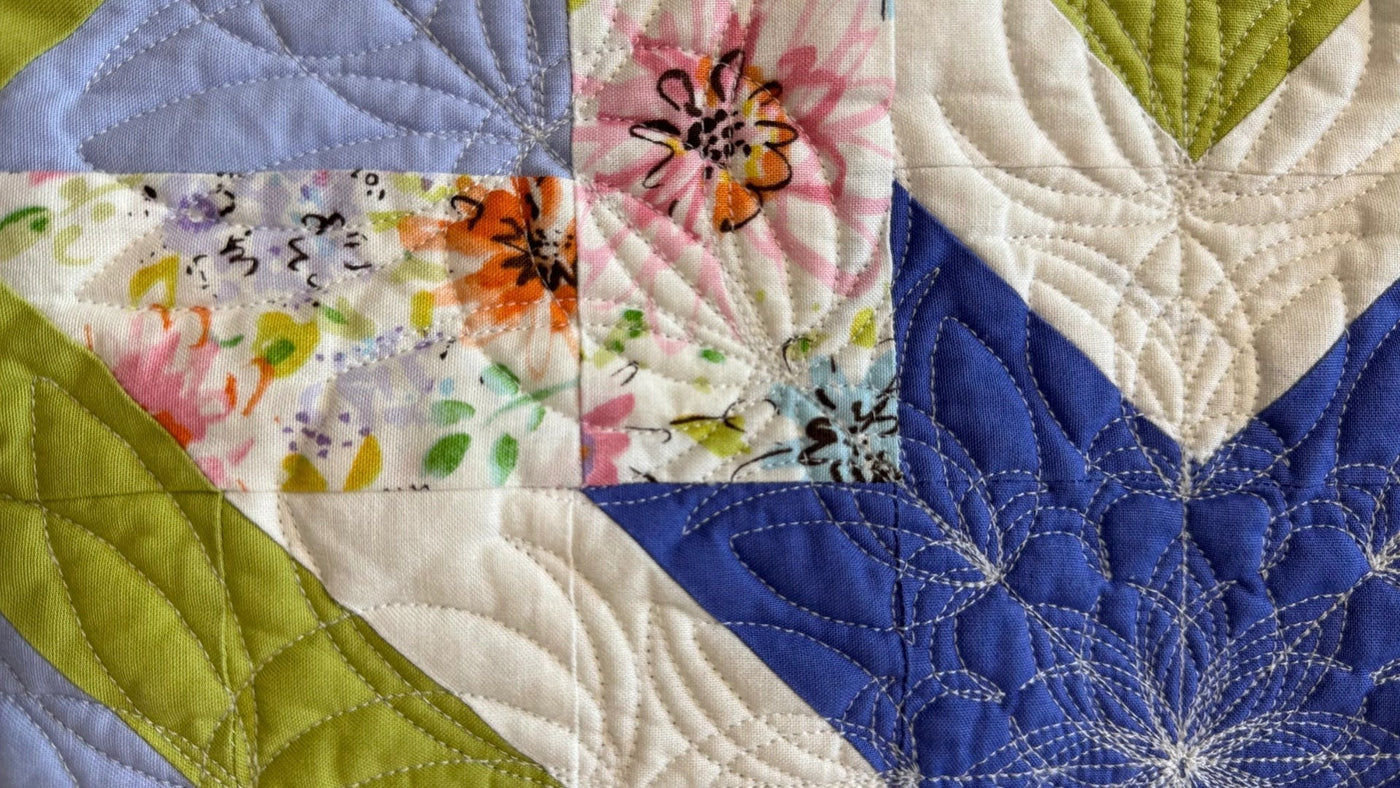
Patchwork is often where many people first fall in love with quilting. It is visual, playful and forgiving. A pile of fabric scraps can suddenly become a pattern, a rhythm or a story.
Patchwork is also a wonderful reminder that small pieces matter. One square may look ordinary on its own, but when it is placed beside another color, another print or another shape, it changes. The whole design grows from relationships between pieces.
That is why patchwork feels almost magical. It turns leftovers into composition. It turns fragments into order. It turns “not enough fabric” into a new idea.
Patchwork can also be a practical entry point into quilting because it teaches layout, contrast, cutting, seam matching and fabric choice. Even a small patchwork project can help a beginner understand how quilts are built piece by piece.

Why Curves Make Quilting Feel Fresh
Many people start quilting with straight lines, squares and rectangles. That makes sense because straight seams are easier to manage in the beginning. But once you understand the basics, curves can open an entirely new world.
Curves soften a quilt. They add movement, circles, waves, arcs and unexpected rhythm. A quilt made with curves can feel playful, modern, fluid and full of life.
Curved piecing can feel intimidating at first because the shapes need to meet carefully. But with templates, guidance and patience, curves become much more approachable. Instead of fighting the fabric, you learn how to guide it.
Moving Thread LA’s All the Curves: Quilting Workshop is a strong next step for students who already have basic machine-sewing skills and want to explore curves, circles, templates and more movement in their quilt designs.
This kind of workshop is ideal for anyone who wants quilting to feel less rigid and more expressive. Curves bring softness, personality and a fresh design language into quilt-making.
The Problem With Unfinished Quilts
Almost every quilter knows the feeling of an unfinished project.
The blocks are made. The idea was exciting. The fabrics were chosen with care. Then the project reaches a difficult stage. How should the blocks be arranged? Does it need a border? Should it become a table runner, wall hanging or full quilt? How should it be bound? What happens next?
This stage is where many quilting projects pause.
The truth is that finishing is its own skill. It takes decision-making, patience and practical technique. A beautiful pile of blocks still needs structure before it becomes a finished piece.
That is why finishing support can be so valuable. It helps students move from “I started this” to “I completed this.”
For students who have already started quilting projects and need help bringing them to completion,Finishing School for Quilters offers support with layout, borders, binding, facing and final finishing decisions.
Quilting As Slow Creativity
Quilting asks you to slow down. That is part of its value.
In a fast world, quilting gives you a process that cannot be rushed too much. You choose. You cut. You place. You stitch. You press. You look again. You adjust. You continue.
That rhythm is calming because it gives your hands something real to do. It also gives your mind a place to settle. The project grows slowly, piece by piece, until something larger appears.
This is one of the reasons quilting still feels relevant. It is not only about making a blanket or wall hanging. It is about entering a creative process that rewards attention.
Quilting also changes how you see fabric. Scraps become possibilities. Old projects become starting points. A color you were unsure about can suddenly become the thing that makes the whole design work.

How To Choose Your Next Quilting Workshop
Choosing the right quilting workshop depends on where you are in the process.
If you are drawn to movement, circles and more expressive quilt shapes, curves can be exciting. If you already have blocks or unfinished quilt projects waiting at home, finishing support may be the best next step.
Here is a simple way to think about it:
- Choose curves if you want to add movement and new shapes to your quilting.
- Choose finishing support if you want to complete work you have already started.
- Choose patchwork as a concept to explore if you want to build your understanding of quilting structure, color and composition.
Each path teaches something different, but all of them build confidence.
Ready To Explore Quilting?
Quilting is history, design, memory and skill all stitched together. It can be traditional or modern, simple or complex, practical or expressive. It can begin with scraps on a table and grow into something meaningful.
If you are curious about quilting, start with the part that excites you most. Try curves. Bring an unfinished project back to life. Learn how fabric, color, pattern and patience can work together.
Browse Moving Thread LA’s quilting workshops and choose the class that fits your next creative step:
All the Curves: Quilting Workshop
Whether you are learning curves or finishing a long-paused quilt, the magic is the same: piece by piece, something beautiful comes together.