Personal Sewing That Actually Fits Your Life: A Beginner Plan for Your First 30 Days
Personal sewing is one of the easiest ways to stop settling for “good enough” clothes and start building a wardrobe that fits your body, your taste, and your real life. If you want the full workshop overview first, start at Moving Thread LA.
What should you learn first so you do not quit in week two?
Start with control, not complexity. Most beginners quit because they jump into a “dream garment” before they can reliably thread the machine, sew a straight line, and press seams properly. Your first goal is consistency. Once your stitches are predictable, personal sewing stops feeling intimidating and starts feeling fun.
If you want the cleanest beginner path, book a fundamentals class that covers setup, stitching, and basic construction skills: Intro to Sewing.

How do you set up a simple personal sewing kit without wasting money?
You do not need a studio or expensive gear. You need a short list of essentials that remove friction and help you finish projects. The essentials are a working machine, sharp scissors, quality thread, extra needles, pins or clips, a seam ripper, a measuring tape, and an iron. The iron matters because pressing is what makes personal sewing look clean and professional.
Skip big tool bundles at the start. Buy upgrades only when you hit a real limit, not because a video told you to.
personal sewing: what is a realistic 30-day plan that builds real skill fast?
This is a simple progression that avoids the common trap of starting too hard.
Week 1: Threading, bobbin, straight stitching, seam allowance control, backstitching.
Week 2: Pressing technique, clean hems, basic edge finishing, simple troubleshooting.
Week 3: Make one wearable, low-stress item that gives you a win.
Week 4: Fit tweaks, small upgrades, and repeating what worked until it is automatic.
Personal sewing improves fastest when you repeat the basics with intention, not when you start a brand-new difficult technique every day.
If you want structure and accountability across a month, a multi-week format can keep you consistent: Intro to Sewing 4-Week Workshop.
What should your first wearable project be if you want it to look “pro”?
Pick a project that has forgiving fit and teaches you fundamentals. Great options include an elastic-waist skirt, a simple top with minimal shaping, or a kimono-style layer. These teach seam finishing, pressing, hems, and clean edges without the pressure of perfect tailoring.
If you want a beginner-friendly garment that still feels stylish, this workshop is a strong first step: Kimono Workshop.

How do you use personal sewing to reduce fast fashion without turning it into a lifestyle lecture?
Keep it practical. Personal sewing helps you buy less because you start making pieces you actually want to wear, and you get confident repairing what you already own. Even simple mending and hemming extend a garment’s life and reduce how often you replace items.
For context on why this matters, here is a quick overview: Fast fashion.
What are the most common personal sewing mistakes and the fastest fixes?
- Bird nesting under the fabric: re-thread top and bobbin, then test on scrap. It is usually threading, not talent.
- Wavy seams: stop pulling fabric, slow down, press more often.
- Puckering: check needle size, thread quality, and tension, and do not force the fabric.
- “My project looks homemade”: pressing and clean hems solve more than you think.
Personal sewing is mostly small corrections repeated. That is why guided learning and feedback speed things up massively.
How do you stay motivated and actually finish projects?
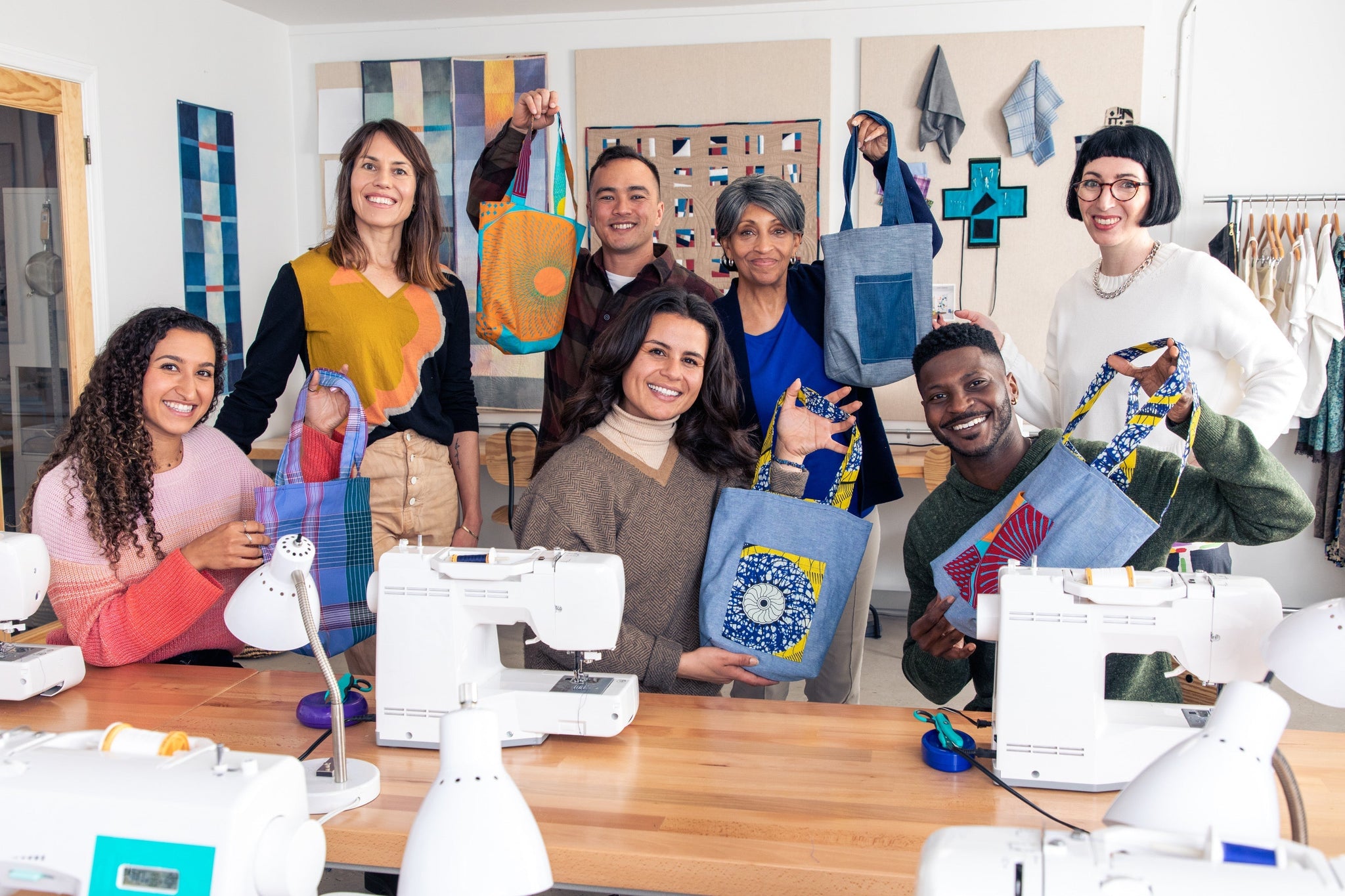
Make it social and remove decision fatigue. Choose one project, one fabric, one schedule. Sewing in a community keeps you moving because you get quick answers and you stop spiraling when something goes wrong. If you want the quick logistics like what to bring, skill levels, and how classes work, use the FAQ here: FAQ.
If you want a simple reference on how sewing machines work at a high level, this is useful: Sewing machine.